The July 1, 2026 Strata Depreciation Report Deadline in Metro Vancouver
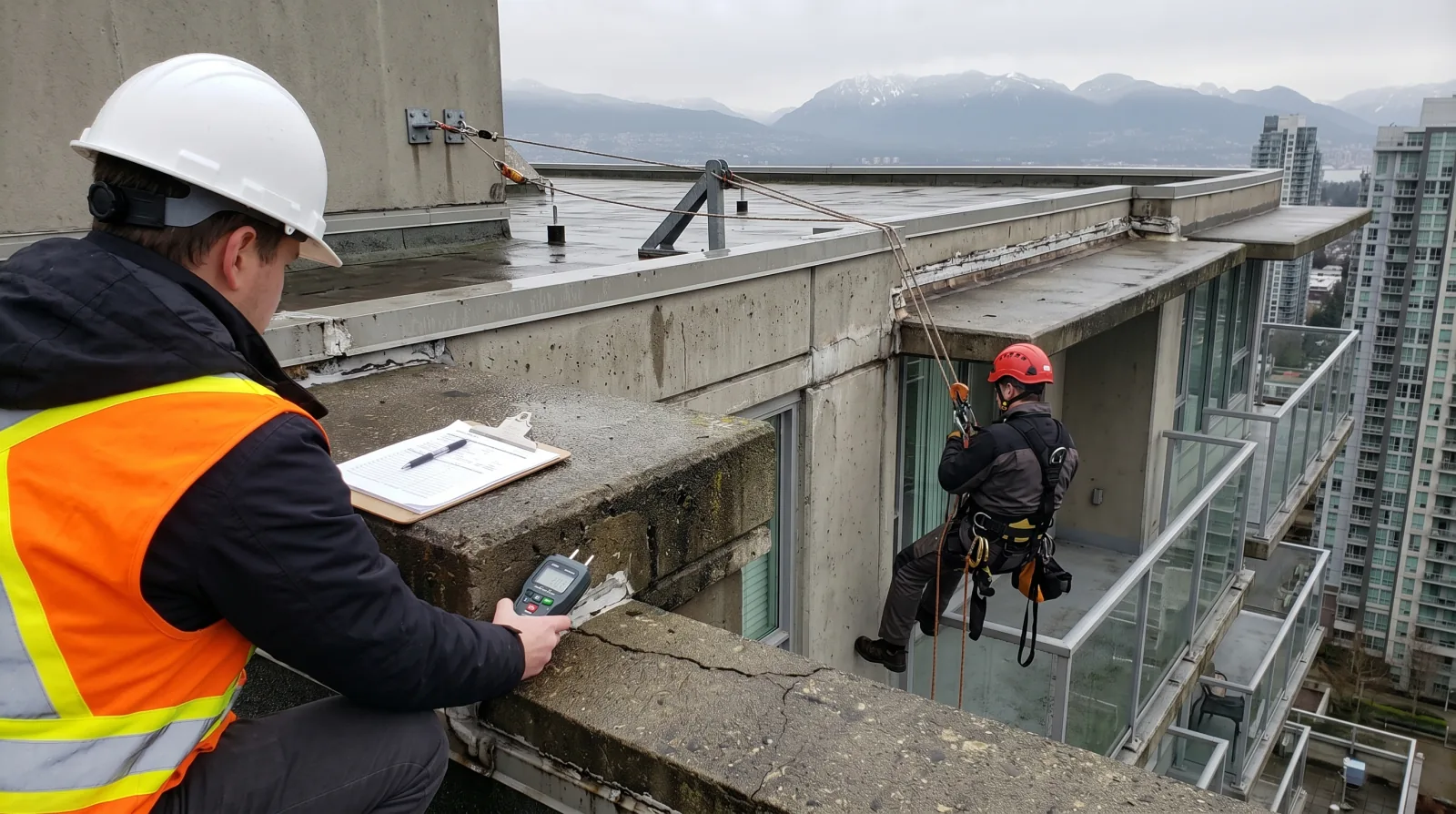
What the July 1, 2026 deadline actually requires
If your strata corporation is in Metro Vancouver, the Fraser Valley, or the Capital Regional District and has five or more lots, it must have a current depreciation report on file by July 1, 2026. Stratas in the rest of the province have until July 1, 2027. After that, every report renews on a five-year cycle — there is no longer a one-off exemption to lean on.
The change that matters most for councils that have been putting this off: the annual three-quarters waiver vote is gone. For years, a strata in Burnaby or Surrey could pass a ¾ resolution at the AGM and defer the report another twelve months. The Province removed that mechanism entirely. The official wording is blunt: strata corporations may no longer defer getting a depreciation report. If your last report predates the current cycle, the building needs a new one.
The Metro Vancouver deadline of July 1, 2026 has now passed. If your strata is in Metro Vancouver, the Fraser Valley, or the Capital Regional District and does not yet have a current report, the building is now offside and should commission one without further delay. Stratas in the rest of BC still have until July 1, 2027, so those councils should start the process now rather than waiting for the deadline to arrive.
We are not depreciation report preparers — that work belongs to the qualified professionals the Province designates, including engineers, architects, accredited appraisers, certified reserve planners, and quantity surveyors. What we do is the physical side of the building those reports are trying to forecast. And after four decades on Metro Vancouver towers, we can tell you exactly which line items decide whether a reserve fund holds or buckles.
Why the building envelope dominates the 30-year forecast
A depreciation report projects the maintenance, repair, and replacement cost of common property over 30 years and gives owners at least three cash-flow funding models for the contingency reserve fund. Owners tend to fixate on elevators and boilers. But on a concrete high-rise in Coal Harbour or a wood-frame complex in Surrey, the numbers that move the reserve the most are almost always the building envelope.
Here is why. Envelope components are large in area, exposed to the worst of the Pacific Northwest climate, and expensive to access at height. A single re-membrane of every balcony and walkway in a mid-size tower, or a full sealant joint replacement across a 20-storey elevation, runs into a scale that dwarfs most mechanical items. When a depreciation report flags these as approaching end of service life, the funding model has to absorb a major capital event — and that is where stratas discover their reserve was built on optimistic assumptions.
The envelope and concrete items that carry the most weight in a typical Metro Vancouver report:
- Waterproofing membranes on balconies, walkways, and plaza decks — liquid polyurethane, PMMA, and PVC sheet systems, each with a different rated lifespan.
- Parkade traffic membranes over occupied space, where failure means water and road salt reaching structural slabs and parked vehicles.
- Sealant and caulking joints — the silicone and polyurethane that seals window perimeters, expansion joints, and panel transitions, with a service life far shorter than the concrete around it.
- Elastomeric wall coatings and rainscreen cladding that form the primary weather barrier on the vertical face.
- Structural concrete — the slab edges, columns, and balcony decks that, once rebar corrosion starts, escalate from a coating problem into a structural repair.
Where lifecycle tables and reality diverge
A depreciation report has to assume a service life for each component, usually pulled from industry benchmark tables. A polyurethane membrane might be modelled at 15 to 20 years, a sealant joint at 5 to 7. Those numbers are reasonable averages. They are also, frequently, wrong for your specific building.
Two stratas can install the same membrane in the same year and reach very different conditions a decade later. A south-facing podium deck in Richmond that ponds water after every storm ages faster than a sheltered balcony in a Brentwood tower. Wind-driven rain on an exposed West Vancouver elevation drives moisture into sealant joints with a force that a downtown courtyard never sees. Vancouver International Airport already averages roughly 1,189 mm of precipitation a year, and North Shore buildings against the mountains see well beyond that. The climate does not read the lifecycle table.
This is the gap a contractor condition assessment closes. When a building envelope consultant and a rope access crew physically examine the membranes, joints, and concrete, the report preparer gets real condition and remaining-service-life data instead of a generic average. The forecast that results is defensible — when an owner at the AGM asks why the special levy is what it is, the council can point to documented condition rather than a database default.
Reading the building envelope section of your report
When the report lands, the section worth your attention is the building envelope inventory and its condition ratings. Components are usually graded on a scale — Good, Fair, Poor, or past estimated service life — with a projected replacement year and cost attached. A Fair rating on a membrane installed 12 years ago is a planning item. A Poor rating, or anything flagged past service life, is a trigger.
That trigger should start a physical condition assessment before the next wet season, not a wait-and-see at the next AGM. The lifecycle model is telling you the component is expected to fail; only an on-site inspection confirms whether you are looking at a localized repair or a full replacement with structural work underneath. We have walked onto plenty of decks rated “Poor” on paper that needed only a reseal and drainage correction — and others rated “Fair” where the membrane was already debonded and water was sitting in the slab. Paper ratings and field conditions are not the same thing, and the difference is often six figures of scope.
Depreciation report vs. condition assessment: what each document does
These two documents are often confused. They serve different purposes and neither replaces the other.
| Depreciation report | Building envelope condition assessment | |
|---|---|---|
| Purpose | 30-year reserve forecast with three funding models for the strata’s contingency fund | Physical inspection of the envelope as it stands today |
| Who prepares it | Designated professionals (engineer, architect, appraiser, reserve planner, or quantity surveyor) — regulated by the Province | Building envelope consultant or contractor with rope access crew for elevated components |
| Depth of inspection | Lifecycle benchmarks and a high-level review; not a hands-on inspection of every membrane and joint | Full physical examination — membranes probed, concrete tapped, joints assessed, drainage checked |
| When you need it | By law, every five years, with Metro Vancouver deadline July 1, 2026 | When the report flags a component as Poor or past service life, or before a major repair decision |
The depreciation report tells you what the model assumes about your building’s future. The condition assessment tells you what is actually happening on the building today. In practice, the most useful sequence is to commission the condition assessment while the report is being prepared, so the report preparer works from field data rather than industry averages.
Our strata depreciation report guide breaks down the red-flag language to watch for and the steps to take once the envelope section flags your building. If you are also trying to understand how a depreciation report differs from a full hands-on envelope study, the BECA versus depreciation report comparison lays out where each one fits.
If your strata has no compliant report yet
If the deadline has already passed for your building, see our guide on what a missed depreciation report deadline actually means for the compliance and funding implications. Some councils in Burnaby, New Westminster, and Surrey are scrambling because their last report is years out of cycle or never existed. The qualified preparers (engineers, appraisers, reserve planners, and the others the Province designates) are booked solid through spring as a result. If that is your building, two things help.
First, get on a preparer’s schedule now and ask what condition information they want. Most will accept and welcome a recent contractor condition assessment of the envelope, because it sharpens their numbers and reduces their own liability on the service-life estimates. Second, prioritize the envelope walk over the cosmetic items. A report can model a lobby carpet replacement off a catalogue without ever seeing it; it cannot responsibly model a 30-year membrane and concrete reserve off a table when the building has visible spalling, ponding, or failed joints. Those are the components where bad assumptions cost owners the most, and they are exactly the ones a field crew can quantify quickly.
We have done these pre-report envelope walks on tight timelines across Metro Vancouver — a consultant and a rope access pair documenting membrane condition, sealant joint failure rates, slab-edge concrete, and drainage in a single mobilization. The output feeds straight into the report’s building envelope section, so the funding models rest on this building’s reality rather than a regional average.
Funding the work the report identifies
Once the report sets out its three funding models, the council has to choose a path — and the envelope items usually decide which path is realistic. Cost on this work is not a fixed number you can read off a chart, and any contractor who quotes a building they have not seen is guessing. What drives the cost is specific and physical: how the crew reaches the work, the condition of the substrate once the old material comes off, the depth of any concrete degradation, whether structural shoring is needed, and how much engineering oversight the scope requires.
Access is the variable owners underestimate most. On a high-rise, reaching every balcony soffit and slab edge with a swing stage means roof rigging, permits, and days of setup. Industrial rope access — certified IRATA or SPRAT technicians descending on two independent lines under WorkSafeBC fall protection rules — reaches the same work with far less mobilization and resident disruption, which is what makes phased, reserve-funded repairs affordable rather than a single catastrophic levy. Our building envelope repair and parkade waterproofing crews work this way across Metro Vancouver, and the concrete restoration hub covers how slab-edge and rebar repairs are scoped once a deck is opened up.
The smart move for a council facing the July 1 deadline is to treat the report and the field assessment as one exercise. Book the condition assessment while the report is being prepared, feed real envelope data into the model, and walk into the AGM with a funding plan built on what the building actually needs — not a database average that may be off by a decade in either direction. The Condominium Home Owners Association of BC has long made the same point: proactive envelope management is what protects the contingency reserve from the special levies nobody wants to vote on.
A depreciation report is a planning document. It is only as good as the condition data behind it. For the components that decide most Metro Vancouver reserve forecasts — the membranes, the joints, the concrete — that data comes from someone on a rope with a moisture meter, not from a table.
Frequently Asked Questions
More from BC Strata Building Envelope Guide
Funding a Building Envelope Restoration in a BC Strata
Special levy, contingency reserve fund, or financing? How a Coquitlam strata pays for a major envelope restoration under the Strata Property Act, and how to phase the cost.
Read article →Building Envelope Warranty Claims for BC Strata Corporations
When a New Westminster strata finds an envelope defect, the first question is who pays — the 2-5-10 warranty or the owners. How to tell a warranty defect from maintenance, document it, and meet the deadlines that decide the answer.
Read article →Building Envelope Engineer vs Contractor: Roles on a BC Strata Project
On a Coquitlam strata restoration, the engineer specifies and the contractor builds. Who does what, who warranties what, and why you need both on a project.
Read article →