Exterior Coatings for Vancouver Buildings
The exterior coating on a Metro Vancouver stucco or concrete building does two jobs: it protects the substrate from wind-driven rain and UV, and on an elastomeric system, it bridges the hairline cracks that form as the building moves through seasonal temperature swings. Getting the system wrong — applying a thin acrylic paint over an active-cracking facade, or an elastomeric over a wet wall — costs more than the original scope in rework within five years. This is the working reference on coating selection and surface preparation for the BC coast.
Why the right coating choice matters on the BC coast
Typical service life of a properly installed elastomeric coating on Metro Vancouver stucco or concrete, versus 5–7 years for standard exterior acrylic paint before recoating is required.
Maximum crack width an elastomeric coating can bridge — the threshold that separates a coatable hairline from a crack that needs repair before any new coating goes on.
Typical per-square-foot cost premium of elastomeric over standard exterior paint — usually recovered in one 15-year period by avoiding two repainting cycles.
Elastomeric vs. acrylic — make the right call
The coating decision starts with the substrate condition, not the product catalogue. A wall with active hairline cracking needs crack-bridging capacity — that's an elastomeric system. A sound, stable facade with colour fade needs a recoat, not a membrane. The guide below walks through the comparison in detail.
 Compare
 Elastomeric coating vs. acrylic paint for stucco & concrete
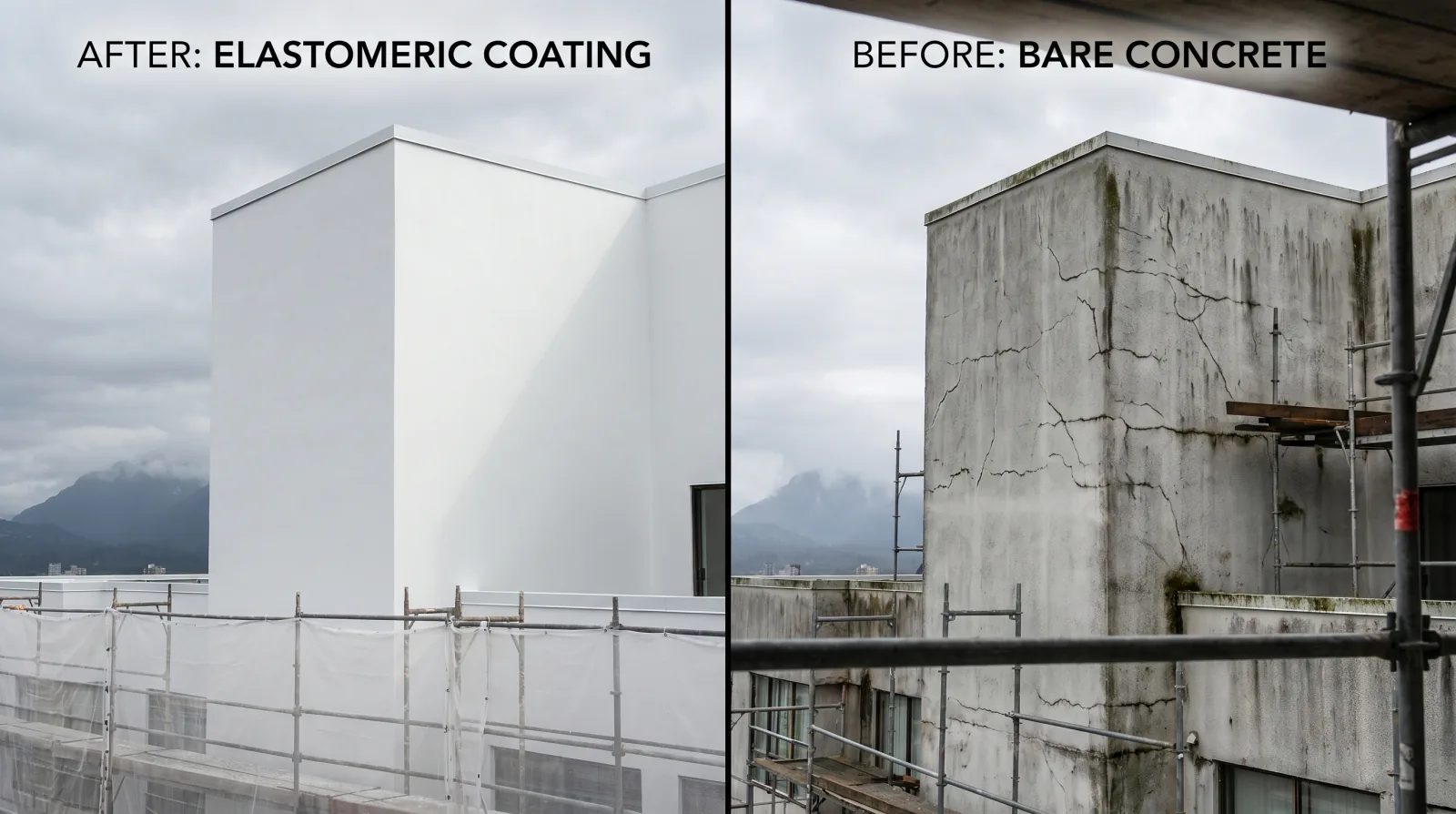
Elastomeric coatings bridge hairline cracks and last 15+ years on Metro Vancouver stucco and concrete high-rises. Standard acrylic paint cracks with the substrate and needs recoating every 5–7 years. When each is the right call — and the math on lifetime cost.
Read the guide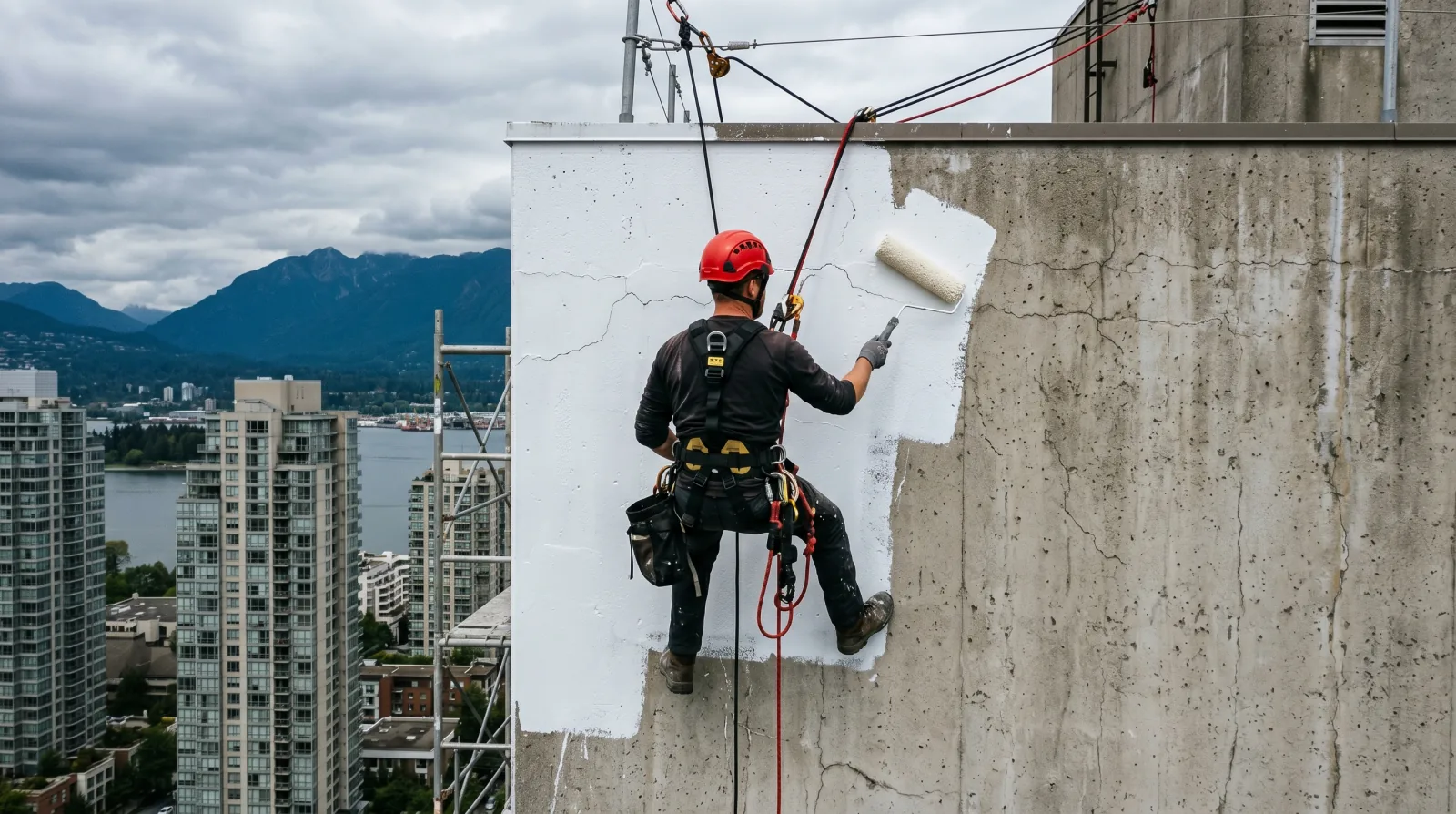 Compare
 Silicone vs. acrylic elastomeric on concrete & stucco towers
Both are high-build, crack-bridging coatings, so the choice turns on breathability, dirt pickup, UV colour hold, and cost. Acrylic elastomeric breathes better and stays cleaner, which suits most Metro Vancouver walls that still carry rain moisture; silicone sheds water harder and holds colour longer on severely exposed faces.
Read the guide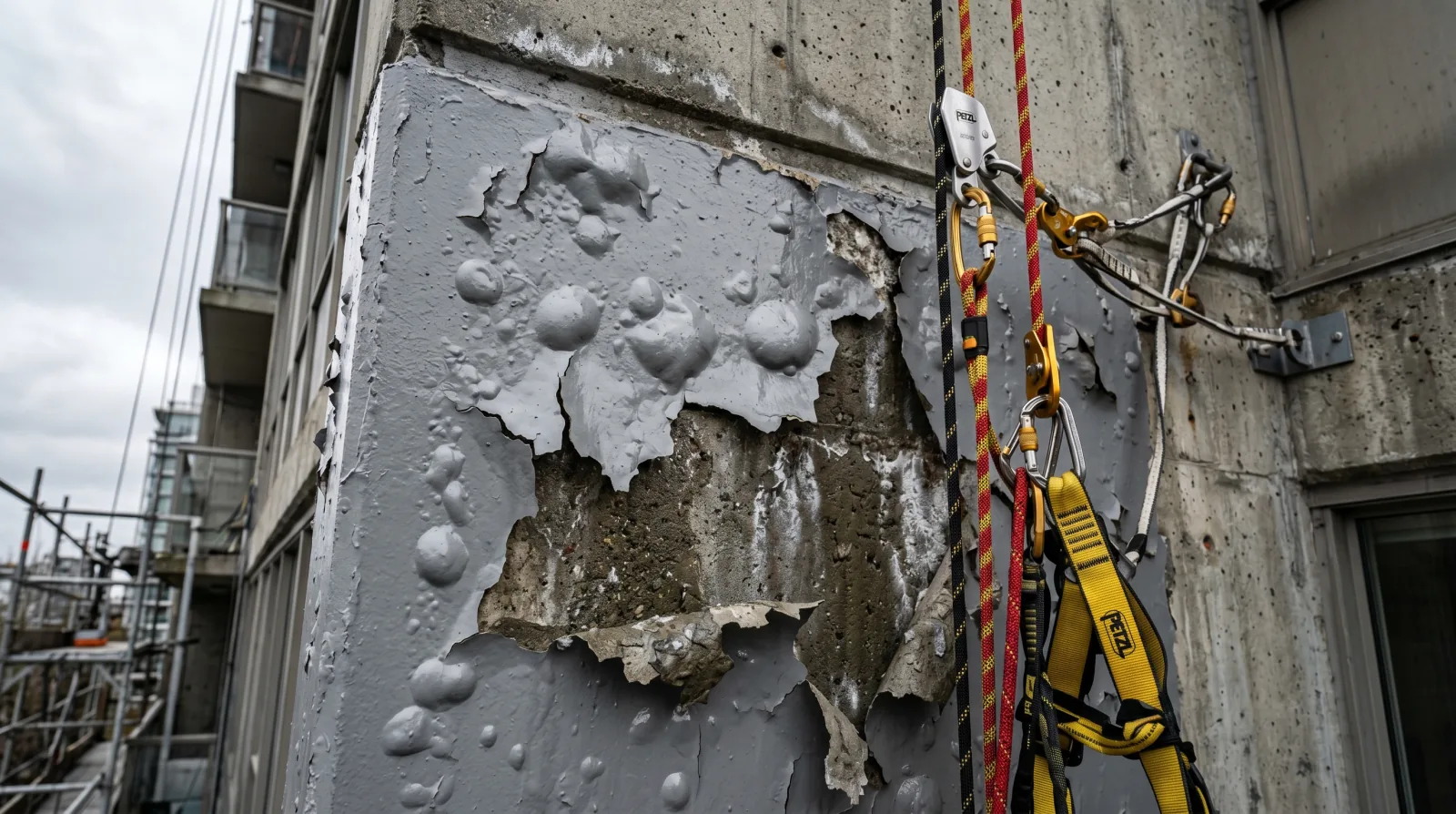 Compare
 Elastomeric coating vs. clear penetrating sealer
An opaque elastomeric coating covers the concrete, bridges hairline cracks, and hides patching and stains. A clear silane or siloxane sealer soaks in, keeps the raw concrete look, and breathes freely but does nothing for cracks. When to coat the wall and when to keep the concrete look.
Read the guide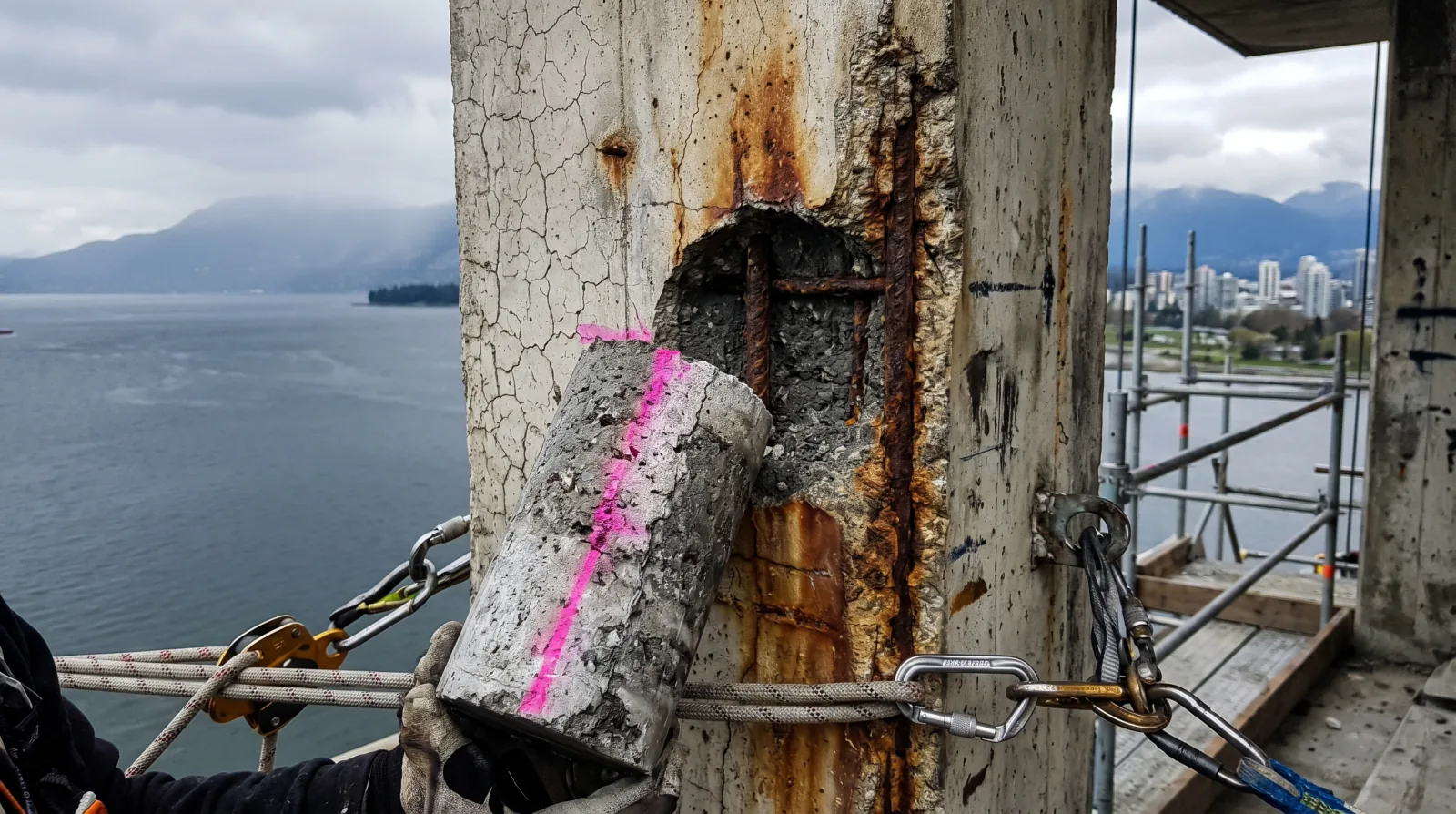 Compare
 Anti-carbonation vs. standard elastomeric coating
A standard elastomeric sheds water and bridges cracks, but an anti-carbonation coating is tested to block the carbon dioxide that corrodes rebar in reinforced concrete. On older BC coast towers, parkades, and balcony edges, protecting the steel means specifying EN 1062-6 CO2 diffusion data, not just water resistance.
Read the guide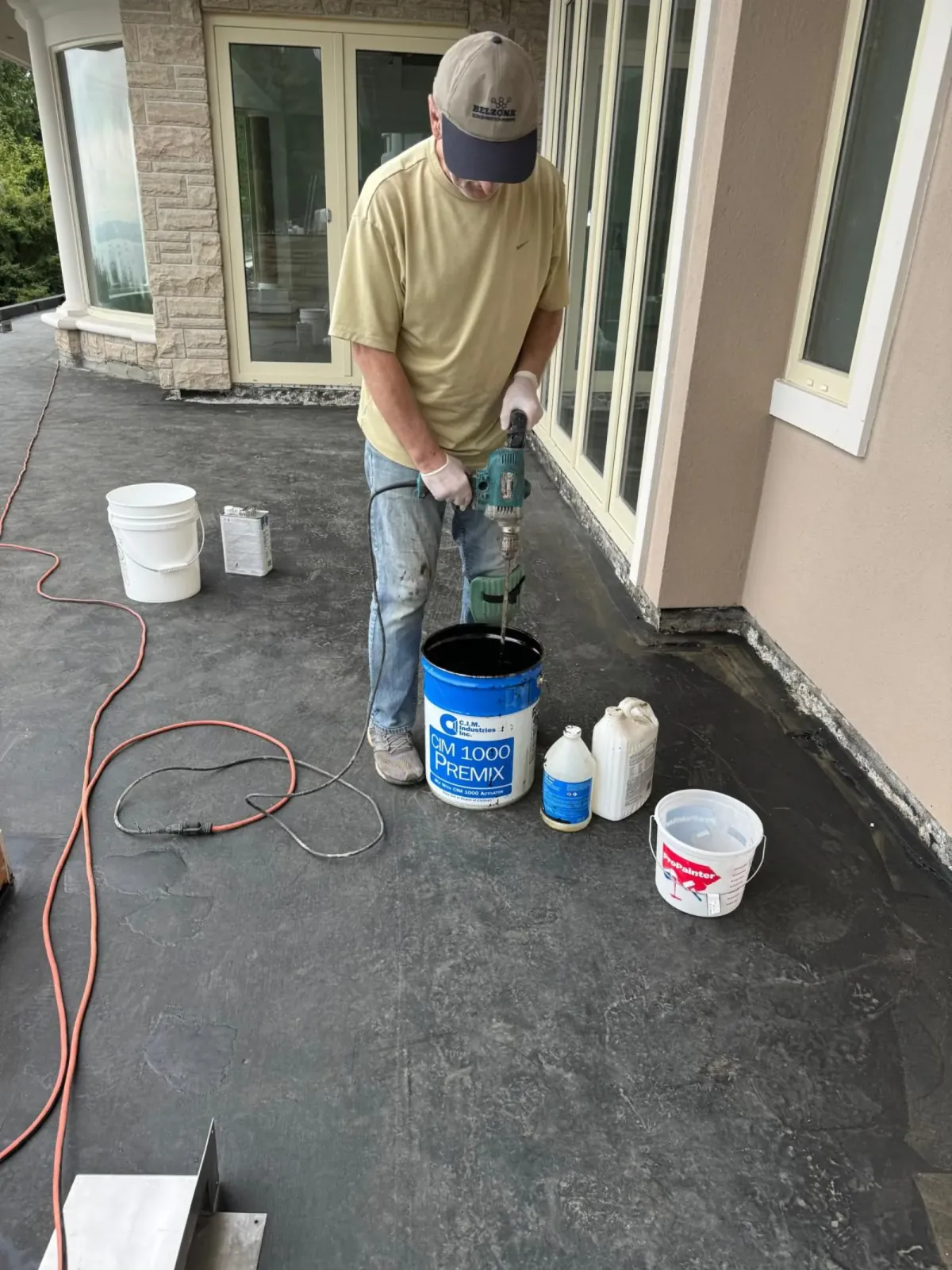 Compare
 Spray vs. roller and brush coating application
Spray covers large open walls fast but drifts onto cars, windows, and neighbours, which makes it a poor fit for occupied strata. Roller and brush application gives consistent film build with no overspray and pairs naturally with rope access. How occupancy, detail, access, and cost decide the method.
Read the guideWhy Vancouver's climate demands more from exterior coatings
Metro Vancouver averages over 1,100 mm of precipitation annually, most of it wind-driven rain against the exposed western and southern faces of high-rise buildings. The BC coast's moderate but persistent freeze-thaw cycling — especially on North Shore buildings above 200 m elevation — and the thermal movement of a concrete or stucco facade through 25–30°C seasonal swings make coating performance demands here significantly higher than in drier climates. A coating that passes in Ontario's dry winters can fail in Vancouver's wet, mild-but-cycling conditions inside three years.
The practical consequence is that most Metro Vancouver strata buildings built with EIFS (exterior insulation and finish system) stucco or concrete construction benefit from elastomeric coating systems rather than standard architectural paint. The extra film build and the rubber-like elasticity of the polymer matrix are what let the coating follow the substrate's movement without cracking. Once a standard paint film cracks, every crack becomes a water entry point into the wall assembly — and in BC, that leads quickly to mold, insulation damage, and structural framing problems.
This connects directly to the sealant and caulking hub: an exterior coating protects the face of the cladding, but every window perimeter, panel joint, and penetration needs a properly specified and installed sealant joint. Coatings and sealants are not substitutes for each other — they are sequential lines of the same defence.
The surface preparation no one wants to pay for — until they have to redo the job
Coating failures in Metro Vancouver are almost always preparation failures. The single most common pattern: a contractor applies a new coating over an incompletely washed substrate, skips the primer on repaired sections, and applies at the wrong film build because the product was thinned to extend coverage. The coating fails in two to four years — well inside the warranty period — and the strata is back at the table for a redo at full cost.
A correctly scoped coating project on a Metro Vancouver high-rise: high-pressure wash the full facade; repair all active cracks wider than 2 mm with appropriate filler and let it cure; replace all failed sealant joints at windows and panel intersections before the coating goes on; confirm substrate moisture content is within the product manufacturer's specification; apply at the specified wet-film thickness per coat, not at a thinned rate. None of those steps is optional. The guide in this hub goes through the elastomeric vs. acrylic choice in detail — but that choice is secondary to getting the preparation right.
Quick answers
What is an exterior coating for a building in Vancouver?
An exterior coating is a protective film applied to the exposed facade of a building — typically stucco, concrete, or masonry — to resist water penetration, protect against UV degradation, and seal hairline surface cracks. On Metro Vancouver high-rises, the two main categories are elastomeric coatings (thick, crack-bridging, 15–20+ year service life) and standard exterior acrylic paints (thinner film, no crack-bridging, 5–7 year life before recoating). The choice between them is driven by the condition of the substrate and the building's exposure to wind-driven rain.
How long does an exterior coating last on a Vancouver high-rise?
A properly specified and installed elastomeric coating on a sound stucco or concrete facade typically performs for 15–20+ years in Metro Vancouver's coastal climate before the film degrades to where recoating is warranted. Standard exterior acrylic paint on the same substrate typically needs recoating every 5–7 years as the thin film cracks with the substrate's thermal movement. The elastomeric's higher upfront cost is usually recovered in one 15-year period by avoiding two repainting cycles.
When do you need to recoat a building exterior in Vancouver?
Visual indicators that a recoating scope is warranted: widespread chalking and colour fade (the binder has oxidised), peeling or flaking sections where the bond to the substrate has broken, hairline cracking in the film surface (not underlying stucco), persistent staining or efflorescence (moisture is moving through the wall). On a regular maintenance cycle, a qualified contractor should assess the coating condition every 5–7 years and confirm the remaining service life before a recoating scope is approved by the strata or property manager.
From the resources library
Why Exterior Coatings Blister and Peel on BC Buildings
A fresh coating on a Surrey tower blistering within a year almost always traces back to one thing: moisture in the substrate. Why it happens, how to diagnose it, and the 5% rule.
Read article ArticlePressure Washing vs Soft Washing Building Exteriors in Metro Vancouver
High-pressure water strips algae off a Coquitlam wall fast — and can blast the coating, sealant, and concrete off with it. When soft washing is the right call, and why surface prep before coating decides everything.
Read article ArticleCold-Weather Exterior Restoration in Coastal BC: What Works in Winter
Winter restoration on a West Vancouver building is possible, but coatings, sealants, and concrete have temperature and dew-point limits. How crews manage it.
Read article ArticleEIFS vs Traditional Stucco for BC Multifamily Buildings
Exterior Insulation and Finish Systems (EIFS) and traditional three-coat stucco look similar from the street but fail in completely different ways. What BC strata councils and developers need to know before specifying, repairing, or buying a building with either system.
Read article ArticleStucco Crack Repair on Vancouver Low-Rise Buildings Before the Wet Season
Hairline cracks in stucco on a Lower Mainland low-rise turn into wet-season leaks if they're not sealed in late summer. What cracks matter, what to ignore, and how the repair is actually done before October.
Read article ArticleElastomeric Wall Coatings on Vancouver Concrete Towers: When They Work
Elastomeric wall coatings bridge cracks and shed rain on Metro Vancouver concrete towers — but only when the substrate is dry. Here is when they protect and when they blister.
Read article ArticleHow Exterior Coatings Protect Buildings in Vancouver’s Climate (2026)
Vancouver’s rain is driven by heavy wind. Discover how elastomeric wall coatings create a breathable waterproof barrier that stretches to bridge concrete cracks, preventing water from seeping into building walls.
Read articleServices this guide connects to
Exterior coating questions
What is an exterior coating for a building in Vancouver?
An exterior coating is a protective film applied to the exposed facade of a building — typically stucco, concrete, or masonry — to resist water penetration, protect against UV degradation, and seal hairline surface cracks. On Metro Vancouver high-rises, the two main categories are elastomeric coatings (thick, crack-bridging, 15–20+ year service life) and standard exterior acrylic paints (thinner film, no crack-bridging, 5–7 year life before recoating). The choice between them is driven by the condition of the substrate and the building's exposure to wind-driven rain.
How long does an exterior coating last on a Vancouver high-rise?
A properly specified and installed elastomeric coating on a sound stucco or concrete facade typically performs for 15–20+ years in Metro Vancouver's coastal climate before the film degrades to where recoating is warranted. Standard exterior acrylic paint on the same substrate typically needs recoating every 5–7 years as the thin film cracks with the substrate's thermal movement. The elastomeric's higher upfront cost is usually recovered in one 15-year period by avoiding two repainting cycles.
When do you need to recoat a building exterior in Vancouver?
Visual indicators that a recoating scope is warranted: widespread chalking and colour fade (the binder has oxidised), peeling or flaking sections where the bond to the substrate has broken, hairline cracking in the film surface (not underlying stucco), persistent staining or efflorescence (moisture is moving through the wall). On a regular maintenance cycle, a qualified contractor should assess the coating condition every 5–7 years and confirm the remaining service life before a recoating scope is approved by the strata or property manager.
Does an exterior coating on a building prevent leaks?
An elastomeric coating reduces water infiltration through the face of the cladding, but it does not replace proper sealant joints at windows, panel intersections, and transitions — those joints are where most water entry actually occurs. A building envelope is a system: the coating protects the broad face, and the sealants seal every penetration and movement joint. Applying a new coating over failed sealants traps any water that enters the joint behind the coating film and can accelerate the very damage you're trying to prevent.
Do rope access technicians apply exterior coatings on high-rises?
Yes — elastomeric and acrylic coatings on high-rise facades in Vancouver are routinely applied via rope access for distributed scopes like single-facade recoats, touch-up campaigns, and localized patch work. For full building recoats, a combination of rope access and swing stage equipment is often used to manage both the detail work around windows and penetrations and the large open field areas. The access method is scoped to the project, not defaulted to one system.
What surface preparation is required before applying an exterior coating?
At minimum: high-pressure wash to remove dirt, chalking, and loose material; repair of any active cracks wider than the coating's crack-bridging capacity; replacement of failed sealants at all joints; and priming on bare or repaired sections. Skipping prep is the most common reason an exterior coating fails ahead of its projected service life. On a Metro Vancouver building, if the substrate is wet — which is common in our climate — the wall must dry to an acceptable moisture content before coating application begins.
Coating work on a Metro Vancouver stucco or concrete building?
We assess facade condition, specify the right coating system, and apply it via rope access or swing stage on strata and commercial buildings across Vancouver, North Vancouver, West Vancouver, and Burnaby.