Oceanfront Window Cleaning & Sealant Repair in West Vancouver
Allweathercoating serves West Vancouver strata towers, luxury residential complexes, and oceanfront commercial properties with high-rise window cleaning, waterproofing, and rope access services.
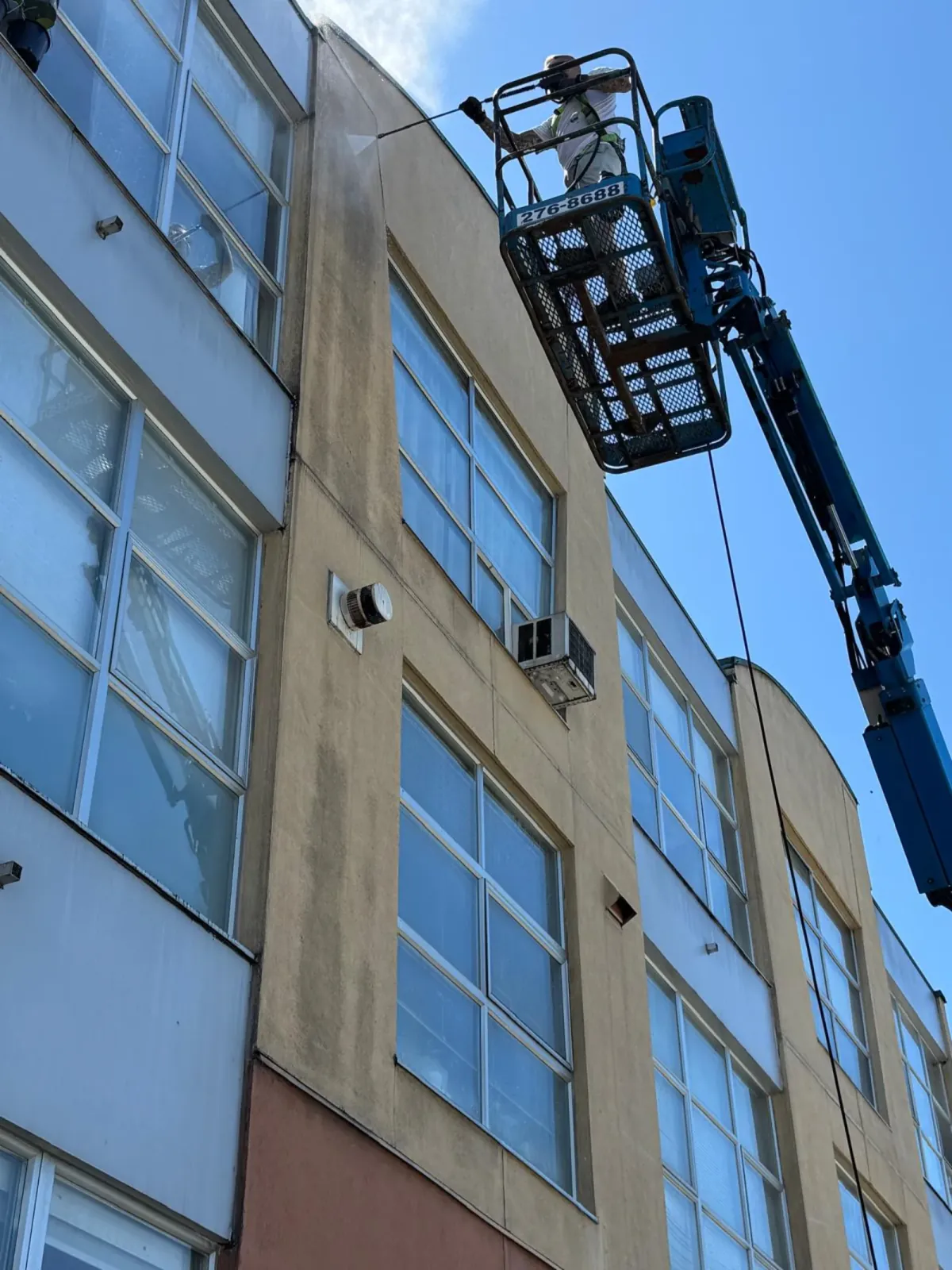
Property Types We Serve in West Vancouver
West Vancouver's unique building stock includes waterfront concrete residential high-rise strata towers in Ambleside and Dundarave, luxury hillside estates in the British Properties, and commercial retail corridors along Marine Drive. Many of the waterfront strata towers were constructed between the 1960s and 1980s, featuring exposed concrete balconies and large single-glazed or double-glazed window assemblies that are highly vulnerable to coastal weathering. The hillside properties feature modern concrete and glass layouts that require specialized access planning.
Waterfront concrete structures face severe concrete degradation and sealant failure. The lack of modern rainscreen systems on older high-rises means that any failure in the window caulking or balcony membrane leads directly to water ingress into the suites. Hillside properties face high wind loads that put stress on window frames and cladding joints. We deploy certified rope access methods to access these properties safely, descending the facades of waterfront towers to inspect joints and apply protective coatings without the need for heavy ground scaffolding.
Our teams also service commercial plazas and community facilities along Marine Drive, providing window washing, sealant replacement, and building facade cleaning. We work closely with strata councils and engineering consultants to coordinate envelope repairs, providing detailed photo logs of all completed work. For historic masonry elements, we verify the coating matches the building's breathing requirements, protecting the substrate from moisture damage.
The waterfront properties along the marine wall are exposed to constant wind pressures. These forces test the limits of glass glazing systems. Our inspections focus on the integrity of the perimeter joints, looking for signs of adhesive failure. In hillside residential estates, we inspect the interfaces between concrete structural slabs and exterior wood siding, verifying that water is directed away from building framing. This preventive approach helps building owners protect their investments over the long term.
Hillside strata developments along the high-elevation slopes of Caulfeild and Cypress Park require specialized structural reviews. These towers, built during the 1980s and 1990s, feature exposed concrete decks, painted stucco, and structural steel support framing. Due to their elevation, they face intense wind loads and high-velocity rain. We inspect these properties, looking for signs of concrete spalling, stucco cracking, and metal corrosion. Our rope access crews perform targeted repairs, cleaning steel support brackets and applying rust-inhibiting primers to prevent structural decay.
Commercial shopping districts along the Ambleside waterfront demand clean, professional site management. These properties, featuring architectural glazing, masonry brickwork, and metal panels, are highly visible to local shoppers. When performing window washing or sealant repairs, we coordinate with business tenants to manage access windows, ensuring retail operations continue with minimal disruption. We provide detailed digital reports with high-resolution photos, allowing property managers to review the condition of the facade and plan maintenance cycles.
Local Coastal Climate Demands
Exposed waterfront properties in West Vancouver face some of the most severe climate stresses in the Lower Mainland. High-velocity winds carrying corrosive marine salt spray directly off the Strait of Georgia subject building facades to constant salt loading and wind-driven rain. Moisture and salt deposits build up on exterior glass, causing permanent mineral etching if not cleaned regularly. The salt spray also penetrates porous concrete, accelerating the carbonation process and corroding internal steel reinforcing rebar, leading to structural concrete spalling.
The annual precipitation in West Vancouver, recorded through regional stations, varies substantially with elevation but consistently subjects envelopes to intense moisture loads. To protect waterfront facades, we apply high-build elastomeric coatings that resist salt-water penetration and bridge thermal cracks. We also implement high-performance silicone sealant joint replacements that accommodate the structural movement of concrete panels during temperature swings. For overhead rope rigging, we coordinate with the municipality to secure District of West Vancouver street occupancy permits. This allows us to set up sidewalk protection barriers and safety zones on public streets during high-access descents, maintaining compliance with WorkSafeBC Part 11 fall protection standards.
The combination of marine salt spray and UV radiation accelerates the drying and cracking of window caulking. We replace aging caulking with premium silicone sealants that offer high UV resistance and flexible movement. These sealants are applied over closed-cell backer rods to establish the correct depth-to-width ratio, ensuring the joint can expand without tearing. We also apply clear concrete sealants to protect exposed balconies, blocking chloride penetration while keeping the concrete breathable.
In addition, West Vancouver's steep terrain means that higher-elevation properties in the British Properties experience colder temperatures and increased frost. This increases the risk of freeze-thaw cycles that can damage concrete slab edges. To protect these surfaces, we apply silane-based sealers that prevent water absorption while remaining permeable to vapor, allowing internal moisture to escape. This prevents the concrete from cracking and flaking, extending the service life of the balcony structure.
Waterfront strata towers also face strong winds that cause building deflection, putting stress on structural joints. Our crews inspect the expansion joints between concrete panels, verifying that the sealant remains flexible. We use commercial-grade silicone sealants designed to accommodate high movement, keeping joints sealed under wind loads. We provide strata councils with detailed close-up photographs of all inspections, verifying the integrity of the building envelope.
Local municipal bylaws in West Vancouver restrict noise and work hours to preserve the quiet nature of residential neighborhoods. When performing concrete chipping or mortar routing, we manage our schedules to comply with these restrictions. We plan structural repair work during permitted hours, minimizing noise impact on surrounding properties. This ensures all work is completed in compliance with local regulations while maintaining high quality standards.
Services Available in West Vancouver
High-Rise Window Cleaning
Allweathercoating provides safe, efficient high-rise window cleaning for strata towers, commercial buildings, office towers, and mixed-use properties across Vancouver, North Vancouver, West Vancouver, and Burnaby.
Local DetailsCommercial Window Cleaning
Allweathercoating provides professional commercial window cleaning for office plazas, retail complexes, institutional buildings, and low-to-mid rise properties in Vancouver, Burnaby, and the North Shore.
Local DetailsGlass Canopy and Awning Cleaning
Allweathercoating cleans and maintains glass entrance canopies, awnings, and overhead glazing for restaurants, retail storefronts, office lobbies, and strata entrances across Vancouver, Burnaby, and the North Shore.
Local DetailsWaterproofing Contractor
Allweathercoating provides specialized commercial and strata waterproofing services designed to protect properties from the challenging Pacific Northwest climate.
Local DetailsBuilding Envelope Repair
Allweathercoating provides targeted, localized building envelope repairs — rope-access concrete spall patching, sealant replacement, and stucco repair — for high-rise and commercial buildings across Vancouver, North Vancouver, West Vancouver, and Burnaby.
Local DetailsRope Access Building Maintenance
Allweathercoating uses certified industrial rope access (SPRAT/IRATA) to perform repairs, washing, and envelope maintenance on tall towers, reducing cost and tenant disruption.
Local DetailsExterior Coatings
Allweathercoating applies advanced exterior wall coatings and elastomeric painting to seal building facades against wind-driven coastal moisture.
Local DetailsSealant & Caulking
Allweathercoating replaces failed joints, window perimeter caulking, and structural expansion sealants to keep coastal rainwater out of strata and commercial properties.
Local DetailsBalcony Waterproofing
Allweathercoating installs high-durability balcony waterproofing membranes and liquid deck coatings to protect concrete decks and underlying framing from water ingress.
Local DetailsParkade Waterproofing
Allweathercoating applies heavy-duty vehicular traffic deck coatings and waterproofing membranes to protect parkade concrete structures from water ingress and salt corrosion.
Local DetailsStucco Repair
Allweathercoating repairs cracked, water-damaged, and deteriorating stucco on strata and multifamily buildings across Vancouver, North Vancouver, West Vancouver, and Burnaby, with texture-matched patching and a moisture assessment before any crack gets sealed over.
Local DetailsRainscreen Installation & Repair
Allweathercoating installs and repairs rainscreen wall assemblies for Vancouver, North Vancouver, West Vancouver, and Burnaby strata and multifamily buildings, converting older face-sealed walls into drained, vented systems that manage wind-driven rain the way the BC Building Code now requires.
Local DetailsConcrete Sealing
Allweathercoating seals structural concrete on Vancouver strata and commercial buildings: parkade slabs, balconies, and exterior concrete walls exposed to wind-driven rain and de-icing salt.
Local DetailsLeak Repair & Water Ingress
Allweathercoating diagnoses, traces, and repairs complex water ingress issues and building envelope leaks in Vancouver, Burnaby, and the North Shore.
Local DetailsBuilding Restoration
Allweathercoating delivers engineer-coordinated, full-scope building restoration for strata and commercial properties — structural concrete repair, brick masonry repointing, cladding renewal, and multi-system envelope rehabilitation across Vancouver, North Vancouver, West Vancouver, and Burnaby.
Local DetailsFrequently Asked Questions
How does oceanfront salt exposure affect high-rise glass in West Vancouver?
Wind-driven marine salt spray deposits a sticky sodium chloride crust on glass surfaces. Over time, under UV exposure, this salt reacts chemically with the silica in the glass, causing permanent etching and cloudiness. Regular window cleaning, at least twice per year, washes away these mineral deposits before they can bond with the glass. We use specialized cleaning agents that dissolve the salt crust without scratching the surface. This regular washing maintains glass clarity and prevents permanent damage. It is the most effective way to avoid expensive glass replacement costs. Removing salt crystals early prevents the chemical erosion of glass and aluminum frames. Our water filtration systems produce pure water that leaves no mineral residue.
Why is concrete spalling more common on West Vancouver waterfront towers?
The marine environment carries airborne chlorides that penetrate the pores of concrete balconies and walls. When these chlorides reach the internal steel reinforcing rebar, they destroy the steel's protective oxide film, initiating corrosion. As the rebar rusts, it expands, cracking and splitting the concrete. We apply concrete corrosion inhibitors and high-durability elastomeric coatings to block chloride penetration and prevent spalling. This protective layer is necessary for exposed waterfront facades, preventing structural concrete decay. We apply zinc-rich coatings that shield reinforcing steel from marine moisture. Concrete repairs are executed in accordance with engineered repair procedures.
What are the municipal permitting requirements for high-access rigging in West Vancouver?
If a building's rope access setup drops over public roads, sidewalks, or lanes, we must secure a <a href="https://westvancouver.ca/business-development/permits-licences/street-occupancy" target="_blank">District of West Vancouver street occupancy permit</a>. This permit ensures that all public areas are protected by WCB-compliant safety zones and hoarding. We manage the permit application, coordinate traffic control, and set up safety barriers to protect the public. This step is necessary to maintain full site safety compliance. The permit application requires a detailed rigging diagram. Sidewalk barricading keeps pedestrians isolated from overhead work zones. We manage the street closure applications from start to finish.
How do you address balcony membrane failures on older West Vancouver strata towers?
Older concrete balconies often feature worn polyurethane coatings that allow water to seep into the slab, leading to concrete decay. We grind the concrete surface to remove the old coating, patch any cracks with epoxy fillers, and apply a continuous, multi-layer polyurethane or fast-curing polymethyl methacrylate (PMMA) membrane. This forms a continuous waterproof seal that protects the structural concrete from salt and rain. We pay close attention to wall-to-deck transitions to prevent leaks. The repair details are compiled in our final project logs. Liquid polyurethane systems bond tightly to concrete, preventing water tracking under the surface. We slope the deck to ensure drainage is correct.
What type of window sealant is best for waterfront properties in West Vancouver?
We use high-performance, low-modulus silicone sealants for waterfront buildings. Silicone offers superior resistance to UV radiation, salt spray, and extreme wind-driven rain compared to polyurethane sealants. Its high flexibility allows it to accommodate the expansion and contraction of concrete panels during temperature shifts, preventing joint splits and keeping suites dry. Silicone is preferred because it does not degrade under coastal UV exposure. We rout out the old joints to bare metal or concrete before applying. High-performance sealants prevent drafts and water ingress during heavy windstorms. Joints are routing to clean concrete before sealant application.
How do you coordinate rope access work on occupied West Vancouver strata towers?
We work with property managers to notify residents at least 7 to 14 days in advance of the scheduled work. Residents are asked to close all windows, remove items from balconies, and close blinds during scheduled drops to maintain privacy. Our rope access methods are quiet and non-intrusive compared to swing stages, minimizing disruption to residents. Clear communication helps maintain a smooth project workflow. Safety warning flags are posted on ground levels. Condo owners receive notice flyers explaining drop locations and schedules. We minimize noise during early morning shifts to preserve residential comfort.
What is the purpose of a BC strata depreciation report for building envelopes?
Mandated under the <a href="https://www.bclaws.gov.bc.ca/civix/document/id/complete/statreg/98043_00" target="_blank">BC Strata Property Act</a>, a depreciation report identifies the life expectancy and replacement costs of major building components, including window sealants, balcony membranes, and coatings. Proactive maintenance planned through these reports helps strata councils budget for repairs, avoiding emergency levies and protecting the building's value. This structural planning keeps maintenance reserves aligned with building needs. Strata councils rely on these records to manage capital reserve funds. Proactive planning prevents structural decay, saving strata properties from costly building envelope restorations. Depreciation reviews are monitored yearly.
How does Allweathercoating verify that roof anchors are safe for high-rise drops?
Our safety supervisors check that the building's permanent roof anchors have an active annual certification logbook, as required by WorkSafeBC. Anchors must be visually inspected yearly and structurally tested by a professional engineer. If the building lacks certified anchors, we can coordinate with engineering consultancies to install and certify them before we begin rigging. This validation is completed before any rope lines are deployed. Ropes are tied off only to confirmed structural points. WCB requires daily safety checks on all rigging gear before work begins. Our supervisors log all inspections in the on-site anchor book.
Can you inspect building envelope joints while performing window cleaning?
Yes. Our rope access technicians inspect the facade while performing window cleaning drops. Because they work directly in front of the building face, they can identify cracked masonry, failing sealant joints, and damaged flashings. We document these issues with photographs and provide property managers with a detailed report, helping them plan targeted repairs. This visual inspection helps identify water entry points early, saving money on diagnostics. This visual checklist is included with our post-project closeout packages. Strata councils use these reports to update depreciation data.
How do wind conditions on the waterfront affect high-access safety and scheduling?
Waterfront properties are exposed to high-velocity winds that can cause rope lines to sway, risking safety. Under WorkSafeBC regulations, we suspend high-access rope operations if wind speeds or gusts exceed 35 km/h, or if there is heavy rain or lightning. We monitor weather forecasts closely to schedule work during safe weather windows, keeping safety as our top priority. We adjust our shift schedules dynamically to utilize calm periods. Rigging setups are adjusted to secure ropes against local wind shear. Sustained sea breezes are measured using anemometers at the roof level. Ropes are tied off securely to prevent lateral movement.
Protect Your Strata or Commercial Building Today
Contact Vancouver’s commercial exterior maintenance specialists. Get fully insured high-rise window cleaning, waterproofing, and building envelope repair.