Spring and Fall Building Maintenance Checklist for Vancouver Strata Councils (2026)
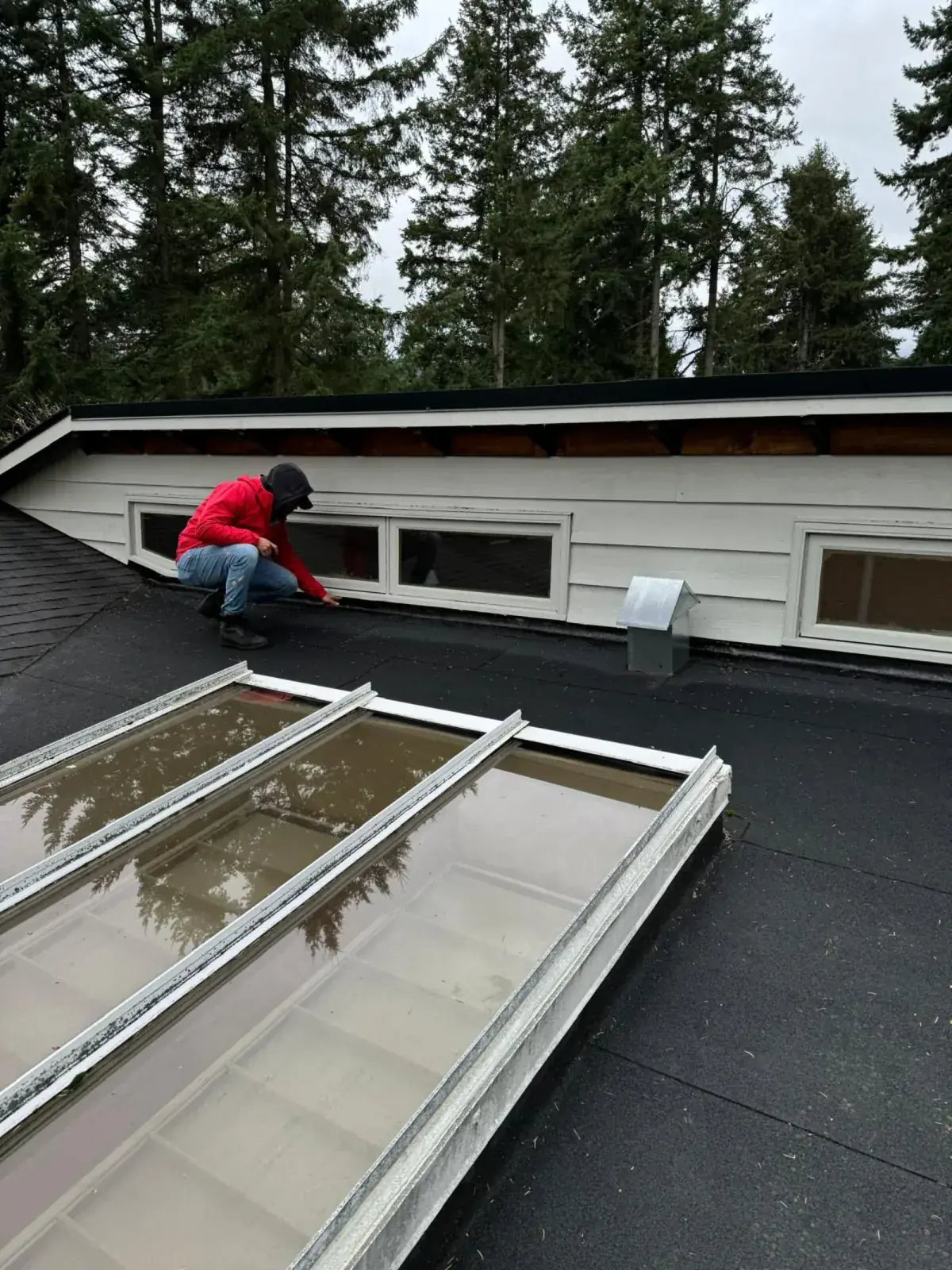
Vancouver’s building envelope has two critical maintenance windows each year — spring and fall. The spring window (April–May) is for assessing winter damage and preparing the building for the dry season. The fall window (August–September) is for sealing everything before the wet season begins. Miss either window and you’re either repairing winter damage at peak-demand prices or entering storm season with known defects.
This checklist covers both. Use it to structure your biennial inspection routine, or hand it to your property management team as a starting framework.
Spring Checklist: Post-Winter Recovery (April–May)
Spring is the time to assess what winter did to the building and prepare for the dry months ahead — when coating, caulking, and membrane work is most reliably executed.
S1. Glass and facade washing
The combination of coastal winter storms, organic pollen, and urban smog leaves a damaging layer of salt and grime on building windows and facades.
- Schedule a building-wide high-rise window cleaning in April or May
- Instruct the cleaning crew to document any failed sealants or cracked window seals found during rope drops
- Wash the building facade to remove chalking coatings, algae, and salt deposits that interfere with spring coating adhesion
- Clear window weep holes — they clog with debris over winter and cause water to back up into the sill track
Urgency trigger: Buildings near the waterfront or major traffic arteries should be washed before pollen season peaks in May, as pollen bonds to salt-loaded glass and accelerates mineral etching.
S2. Balcony and parkade membrane audit
Balcony decks and parking structures experience heavy physical stress during winter freeze-thaw cycles.
- Inspect balcony walking surfaces for bubbling or peeling membranes, open seams on vinyl decks, or soft decking underfoot
- In the parkade, check concrete floors for wear patterns and cracks
- Inspect parkade ceilings for white calcite formations (efflorescence) — these indicate active water leaks through the slab
- Wash parkade drive surfaces to remove road salts tracked in by vehicles during winter — salt sitting on worn coatings accelerates slab corrosion
Urgency trigger: Soft decking underfoot on vinyl balconies indicates subfloor rot. This is a structural issue that should be assessed before summer resident use of the deck.
S3. Roof anchor certification verification
Before any exterior height-access maintenance can begin, the building’s roof anchors must be verified.
- Review the building’s anchor logbook — confirm the annual visual inspection and tag certification are current
- Check whether any 5-year load-test certifications are approaching expiration (schedule a P.Eng. to recertify before technicians need to rig)
- Note the anchor locations relative to planned summer maintenance scope — anchors on inaccessible parts of the roof may need engineering review
Urgency trigger: Technicians cannot legally rig ropes or stages to uncertified anchors under WorkSafeBC OHS Section 11.2. If anchors are out of compliance, summer window cleaning and envelope inspections must wait until they’re recertified.
Fall Checklist: Pre-Storm Weatherproofing (August–September)
Fall is the most critical maintenance window in BC. The Lower Mainland’s wet season doesn’t wait for property managers to be ready. Small repairs identified in September are day-work. The same damage found in December becomes an emergency.
This checklist is organized by building system. Work through it in August and September, so anything flagged can be assessed, scoped, and scheduled before the storm season starts.
F1. Balcony membranes and deck waterproofing
Balcony waterproofing is the most common source of active water ingress in strata towers. Inspect from ground level with binoculars if direct access isn’t available — or commission a rope-access visual survey of the highest-risk elevations.
- Check for bubbling, blistering, or surface cracking on the membrane field
- Inspect perimeter upturns where the membrane meets the building wall — look for separation or cracks at the termination edge
- Check drain collars and floor drains — clear any debris and verify the seal between drain flange and membrane
- Look at railing post penetrations for cracked or missing liquid flashing around post bases
- Check door threshold transitions for membrane lifting or gaps where the deck meets the suite door
- Note any decks with standing water (poor drainage is a substrate problem that a new membrane alone won’t fix)
- If soffit staining or drips are visible below a balcony, flag for leak investigation before winter
Urgency trigger: Any blistering, separation at perimeter upturns, or drain collar damage should be addressed before October. Water pooling on the balcony surface after rain is not normal and indicates a drainage or membrane problem.
F2. Window and curtain wall sealants
Exterior sealants have a service life of 7–10 years in Metro Vancouver’s coastal climate. Failed sealants are the most common entry point for wind-driven rain in high-rise buildings.
- Walk the building perimeter at ground level and use binoculars to scan upper floors for visible sealant cracks or gaps
- Pay particular attention to south and west exposures — these faces receive the most wind-driven rain
- Check window perimeter sealants at the interface between window frames and adjacent concrete or cladding panels
- Inspect horizontal sealant joints (window sills, parapet caps, coping) — horizontal joints accumulate water and fail before vertical ones
- Look for sealant that has pulled away from the substrate on one or both sides
- Check expansion joints and movement joints — look for over-compression, tearing, or complete loss of sealant
- Note any areas where previous repairs have been done — repairs over old failed sealant often fail within 1–2 seasons if not fully stripped
Urgency trigger: Cracked, split, or debonded sealants on any wind-exposed elevation should be addressed before the wet season. A failed 2-metre joint at a window head can leak into multiple units.
F3. Concrete condition (spalling, rebar corrosion)
Concrete spalling creates two problems: falling debris (a safety hazard) and progressive structural deterioration. Fall is the right time for a condition survey because concrete inspectors are more available than in peak spring season.
- Inspect balcony slab edges and soffit edges from ground level — look for rust staining, cracked concrete, or visible piece loss
- Check column bases and pilaster surfaces at parkade entrances and ground-floor exposed concrete
- Look for rust-colored staining running down the facade below balconies or window heads — this indicates rebar corrosion behind the surface
- Sound concrete in accessible areas by tapping — hollow sound indicates delaminated concrete behind the surface
- If any concrete is visibly cracked and loose at height, rope-access barrier tape should be installed immediately and emergency repair commissioned
- Review any concrete repairs done in the last 5 years — check for debonding around patch edges
Urgency trigger: Any loose or falling concrete at height is an immediate WorkSafeBC obligation. Rope access visual surveys of high-elevation concrete are the most cost-effective tool for high-rises — they identify spalling early, before it becomes structural.
F4. Roof and parapet
Flat and low-slope roofs fail silently — water can infiltrate the roof membrane and track into the building structure for months before it shows up on a ceiling. A fall roof inspection is easier to schedule than a mid-winter emergency call.
- Walk the accessible roof area before and after a heavy rain — note any standing water (ponding water accelerates membrane degradation)
- Check all roof drains and overflow scuppers — clear debris and verify they’re not impeded
- Inspect flashings at parapet bases, mechanical penetrations, skylights, and curb transitions
- Look for membrane bubbling, seam lifting, or punctures in traffic areas
- Check the parapet coping cap joints — these are high-exposure horizontal surfaces and a common water entry point
- Note any cracks in the concrete parapet — water in parapet cracks freezes and expands, accelerating deterioration through the winter
- If the roof has not had a condition assessment in the last 5 years, schedule one before the wet season
Urgency trigger: Any area of active ponding after rain, or seam lifting visible from the rooftop, should be investigated before the wet season.
F5. Exterior coatings and facade surfaces
Deteriorated coatings and stucco allow water absorption into the wall assembly, accelerating envelope decay over the winter.
- Look for peeling, flaking, or chalking paint — peeling paint indicates water behind the film; chalking is the precursor to failure
- Check stucco facades for hairline cracks — fine cracks fill with water and freeze-thaw through winter, widening each cycle
- Look for efflorescence (white mineral deposits) on concrete or masonry — a direct sign of water migrating through the material
- Note any areas of biological growth (green algae, black mold) on the facade — these hold moisture and degrade coatings
- If the building facade was last coated more than 10 years ago, commission a condition survey to assess whether it’s ready for a re-coat
Urgency trigger: Active stucco cracks wider than 1/16” on wind-exposed faces should be sealed before November. Perimeter caulking around stucco patches should also be checked.
F6. Parkade drainage and deck coating
Parkade problems are invisible until they’re expensive. Fall inspection catches drainage failures and coating wear before winter salt loads arrive.
- Check trench drains and floor drains — clear debris and verify they’re flowing freely
- Inspect the coating surface for cracking, delamination, or heavy wear in drive lanes
- Look for calcite (white dripping formations) on the soffit or structure below the slab — indicates water passing through the deck
- Check expansion joint sealants in the slab — these carry movement load and fail before the membrane field
- Inspect ramp coatings — ramps take the highest wear and need the most frequent attention
- Note any staining or corrosion at column bases or slab edges inside the parkade
Urgency trigger: Active drips or calcite formations mean water is currently passing through the deck. The source should be traced and sealed before the salt season begins.
F7. Gutters, downspouts, and drainage
Metro Vancouver’s heavy seasonal rainfall overwhelms clogged gutters quickly. This is the most basic maintenance item — and the most commonly deferred.
- Clear all gutters and troughs of leaves, debris, and moss
- Flush downspouts with a hose and verify they’re flowing freely to grade or into the building’s storm drainage system
- Check downspout connections at grade — look for disconnected, cracked, or redirected discharge pipes
- Inspect gutter hangers and fasteners — sagging gutters overflow against the fascia, rotting wood soffits and window frames
- Check that all overflow scuppers are clear and will drain before gutters overflow onto adjacent roofing or walls
- For buildings with planted roofs or terraces: verify drainage mats and overflow weirs are clear
Urgency trigger: Blocked gutters overflow into the wall assembly within the first significant rainstorm. This is a two-hour preventive task that avoids a five-figure leak investigation.
F8. Documentation and strata records
Good fall maintenance includes updating the building’s maintenance history — critical for depreciation reports, insurance claims, and future contractor assessments.
- Update the maintenance log with all fall inspection findings, including photos
- File contractor close-out reports from any summer work into the strata’s building file
- Note membrane and coating installation dates for lifecycle tracking
- Confirm whether the building’s depreciation report reflects recent repairs — if major work was done since the last report cycle, the asset condition and remaining life estimates may need updating
- Review whether any items identified in previous fall inspections were addressed — deferred items should be escalated to the strata council before another winter
Scheduling seasonal work: the windows are short
Spring: The window for membrane and coating work opens in April once temperatures are reliably above 5°C and substrates have dried. Getting assessments done in March allows scoping in April and work scheduled for May — before summer demand peaks.
Fall: In Metro Vancouver, the practical window for outdoor building envelope work closes in late October. Sealant and coating applications require dry weather and temperatures above 5°C. Getting a contractor to assess flagged items in August allows scope definition in September and work scheduled for October — before the window closes.
Items that cannot be addressed before winter should be reviewed for temporary emergency treatment (caulking a cracked sealant joint, patching an exposed membrane edge) to carry the building through to spring, when full repairs can be properly executed.
For leak investigations, emergency repairs, and concrete safety issues, Allweathercoating is available year-round across Vancouver, North Vancouver, West Vancouver, and Burnaby.
The depreciation report connection: why seasonal maintenance records matter
Under the 2024 amendments to the BC Strata Property Act Regulation, strata corporations of five or more lots in the Metro Vancouver, Fraser Valley, and Capital Regional District areas must have a current depreciation report by July 1, 2026, with renewal on a five-year cycle and no deferral option. Every subsequent cycle must be conducted on the same basis.
A depreciation report assessor estimates remaining service life and replacement cost for each building component using condition ratings — Good, Fair, or Poor — typically based on a visual walkthrough of the building. The quality of those ratings depends heavily on the maintenance history the strata provides. A strata that hands the assessor a three-year log of dated inspection photos, documented repairs, and seasonal checklist completions will receive more accurate condition ratings and lifecycle estimates than one that cannot document what work was done or when.
That accurate documentation has two practical effects: it may extend the estimated remaining service life of well-maintained components (lowering near-term reserve fund requirements), and it provides evidence for the assessor that deferred items are known and planned — rather than unknown risks that get conservatively rated Poor.
The fall and spring checklist items above are also the items that appear in every depreciation report building envelope section. Running these checks annually, logging the findings, and keeping contractor close-out reports gives the strata the documentation it needs to go into each five-year depreciation cycle with a defensible, current picture of its building’s condition.
Proactive lifecycle planning
By implementing this dual-season checklist, strata councils and property managers can extend the lifespan of building components, minimize resident complaints, and maintain a clear, updated depreciation report. Average component lifespans to track:
- Window perimeter sealants (polyurethane): 8–12 years
- Vinyl balcony membranes: 10–15 years
- Elastomeric wall coatings: 10–15 years
- Roof anchors: certified annually; physical anchors last 25+ years if maintained rust-free
Proactive maintenance preserves property values and protects strata reserve funds from unplanned high-cost special levies.
linkedinShare: | Fall is the last practical window to find and fix envelope problems before the storm season starts.
October through March in Metro Vancouver is when wind-driven rain, atmospheric rivers, and the occasional early freeze test everything the building envelope is supposed to do. A drain that’s 70% blocked, a sealant joint that’s been chalky since spring, or a flashing that’s lifted at the corner — none of those are problems in August. All of them are problems in November.
Three inspection items that pay for themselves reliably: drain clearing, sealant review, and a close-up look at flashings. Not the cladding, not the windows — the transitions and penetrations where water is directed out of the wall rather than into it.
For strata councils in Burnaby, Coquitlam, and North Vancouver managing towers with any age on them, a fall inspection is also the time to assess anything that came up in the depreciation report as a watch item. If the 5-year plan includes balcony membrane replacement or a concrete restoration program, fall is when you confirm the scope is still accurate before the next budget cycle.
Skipping the fall inspection isn’t a cost savings. It’s a decision to find out what failed during the first atmospheric river instead of before it — which is a worse time to find out, with fewer contractors available and weather windows that don’t cooperate with emergency repairs.
The full seasonal checklist, organized by priority and consequence, is in the post.
#BuildingMaintenance #FallChecklist #StrataVancouver #BuildingEnvelope #AtmosphericRiver
Related guides:
- Balcony Waterproofing Hub — signs of failure, membrane types, repair vs. replace
- Strata Guide: Who Pays for Balcony Waterproofing in BC? — BC Strata Property Act obligations
- Sealant & Caulking Service Page — what a sealant replacement project involves
- Leak Repair & Water Ingress — ASTM E1105 spray testing and diagnostic process
- Strata Guide: Depreciation Report — using the depreciation report to plan maintenance budgets
Frequently Asked Questions
More from BC Strata Building Envelope Guide
Funding a Building Envelope Restoration in a BC Strata
Special levy, contingency reserve fund, or financing? How a Coquitlam strata pays for a major envelope restoration under the Strata Property Act, and how to phase the cost.
Read article →Building Envelope Warranty Claims for BC Strata Corporations
When a New Westminster strata finds an envelope defect, the first question is who pays — the 2-5-10 warranty or the owners. How to tell a warranty defect from maintenance, document it, and meet the deadlines that decide the answer.
Read article →Building Envelope Engineer vs Contractor: Roles on a BC Strata Project
On a Coquitlam strata restoration, the engineer specifies and the contractor builds. Who does what, who warranties what, and why you need both on a project.
Read article →