Building Envelope Decisions for Vancouver Buildings
The building envelope is everything that keeps the weather out: the walls and cladding, the windows and their seals, the roof, the balconies, and the parkade slab. On the BC coast it carries a heavy load, because Metro Vancouver takes wind-driven rain against exposed faces for months at a time. Most of the money a strata or commercial owner spends on the envelope goes to a handful of either-or decisions: repair or reclad, torch-on or single-ply, membrane or sealer, specialist or generalist. This hub walks through each of those decisions with the local building science behind it.
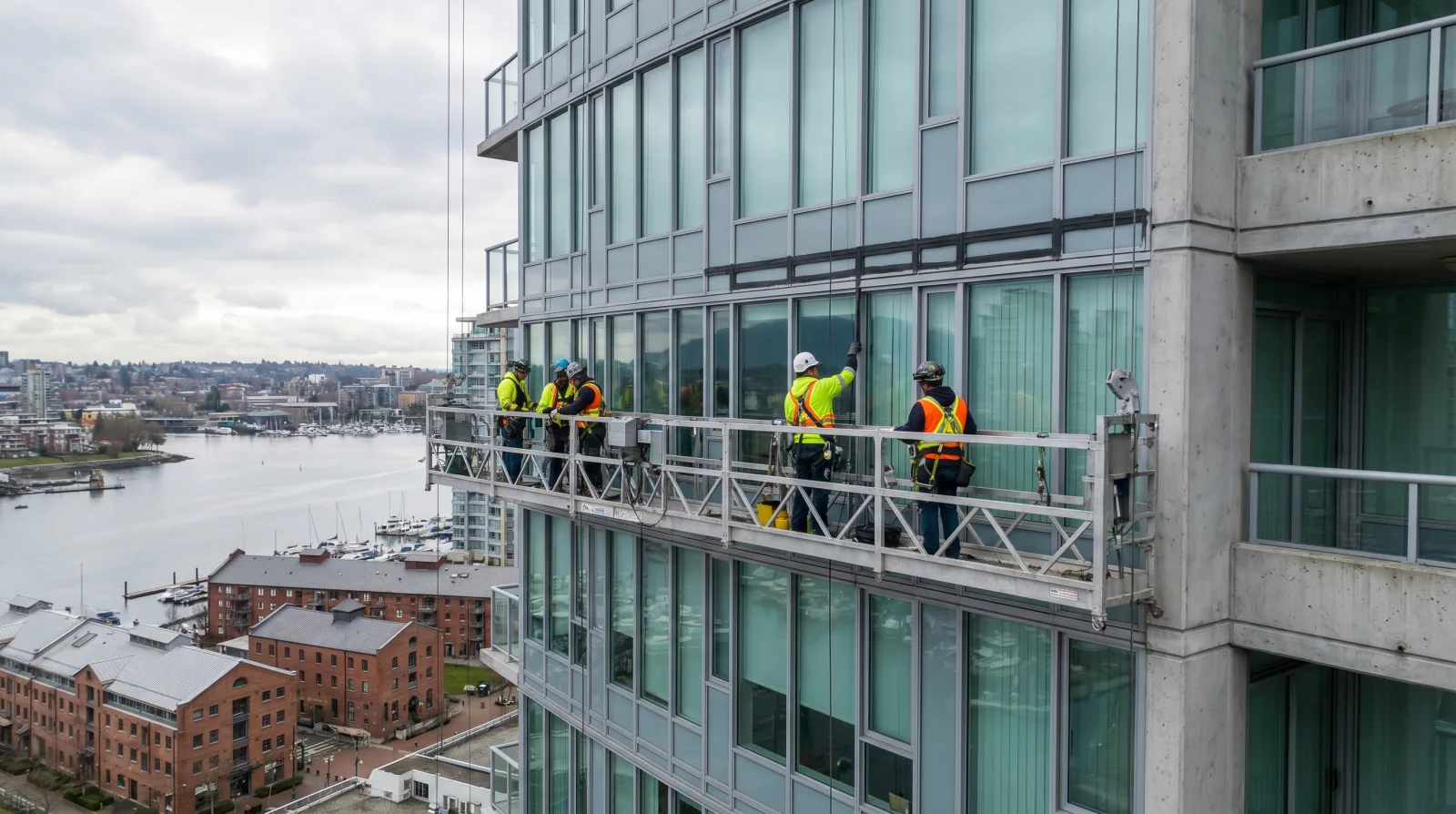
Why envelope decisions carry more weight on the BC coast
Annual precipitation across Metro Vancouver, most of it wind-driven rain against exposed west and south building faces. This is the reason envelope details that pass in a dry climate fail here.
The year rainscreen construction became a requirement in the City of Vancouver after the leaky-condo failures, extended to coastal BC by 2006 per BC Housing guidance.
The envelope works as one connected system. A leak at a window head can surface three floors down, so fixing one symptom in isolation rarely holds.
Eight either-or decisions, explained for the BC coast
Each guide below takes one real decision a strata council or building owner has to make, lays out the two options side by side with the tradeoffs, and gives a decision framework instead of a sales pitch. Where the simpler or cheaper option is genuinely fine, the guides say so.
 Compare
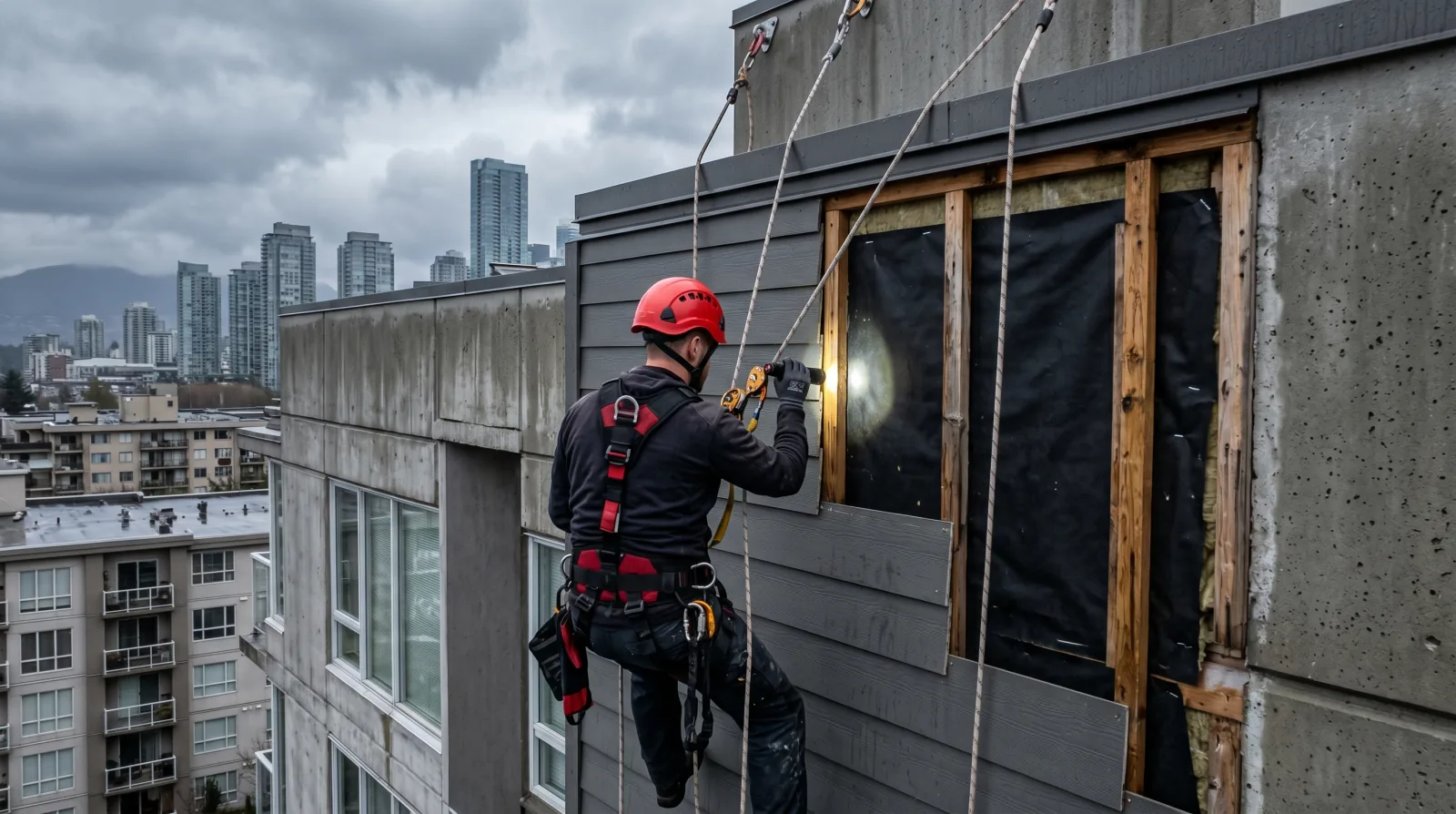
 Rainscreen vs. face-sealed wall assembly
Why face-sealed walls failed in the BC leaky-condo era, how a drained and vented rainscreen cavity manages the water that always gets in, and what that means for an older building facing a retrofit.
Read the guide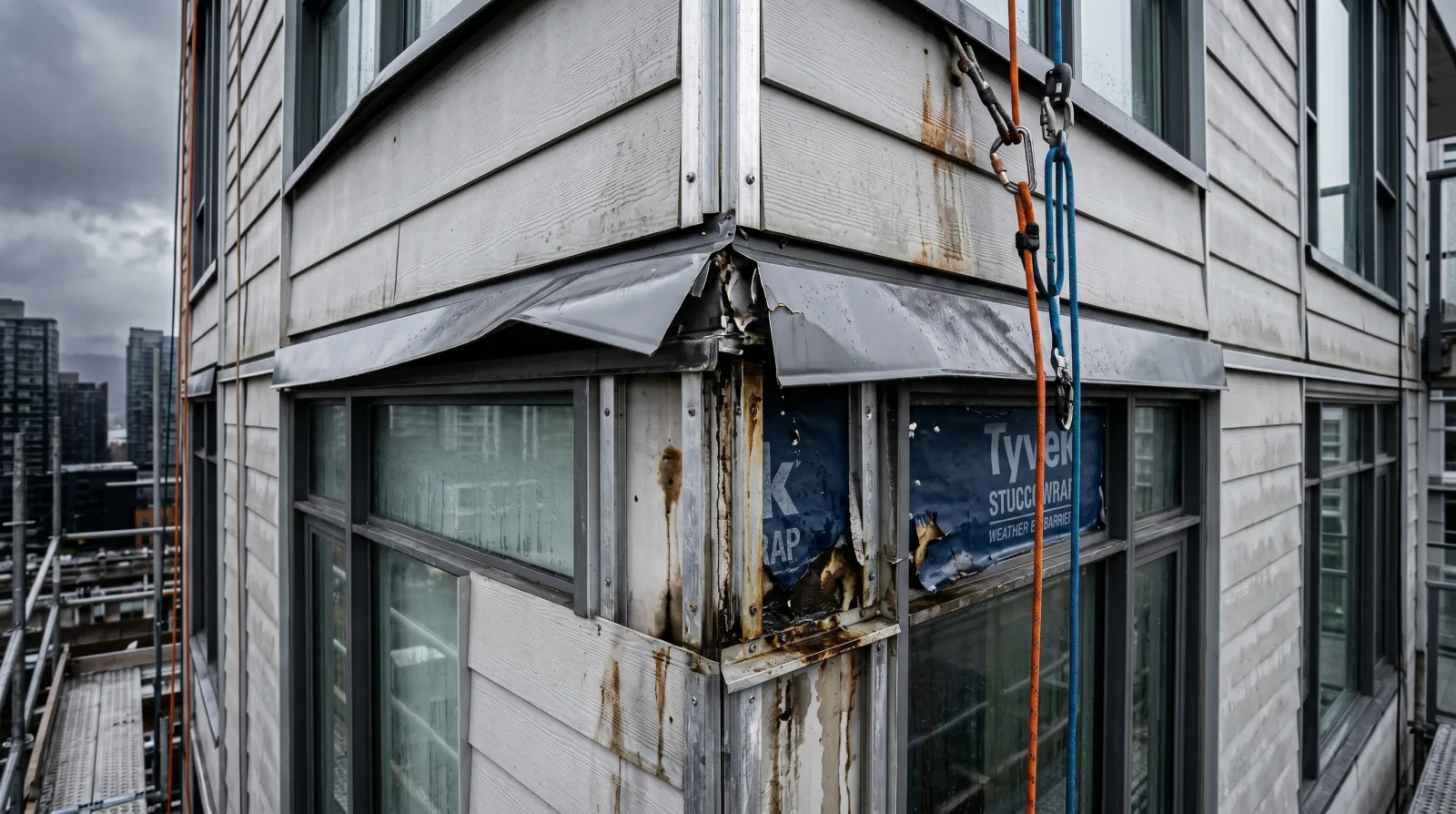 Compare
 Targeted envelope repair vs. full recladding
When a targeted repair keeps buying time and when recladding is the rational spend. The decision drivers: extent of damage, remaining cladding life, cost certainty, and resident disruption.
Read the guide Compare
 Torch-on vs. single-ply low-slope roofing
SBS modified bitumen (2-ply torch-on) against TPO and PVC single-ply on BC strata and commercial low-slope roofs. Seams, hot-work fire risk, service life, reflectivity, and cost.
Read the guide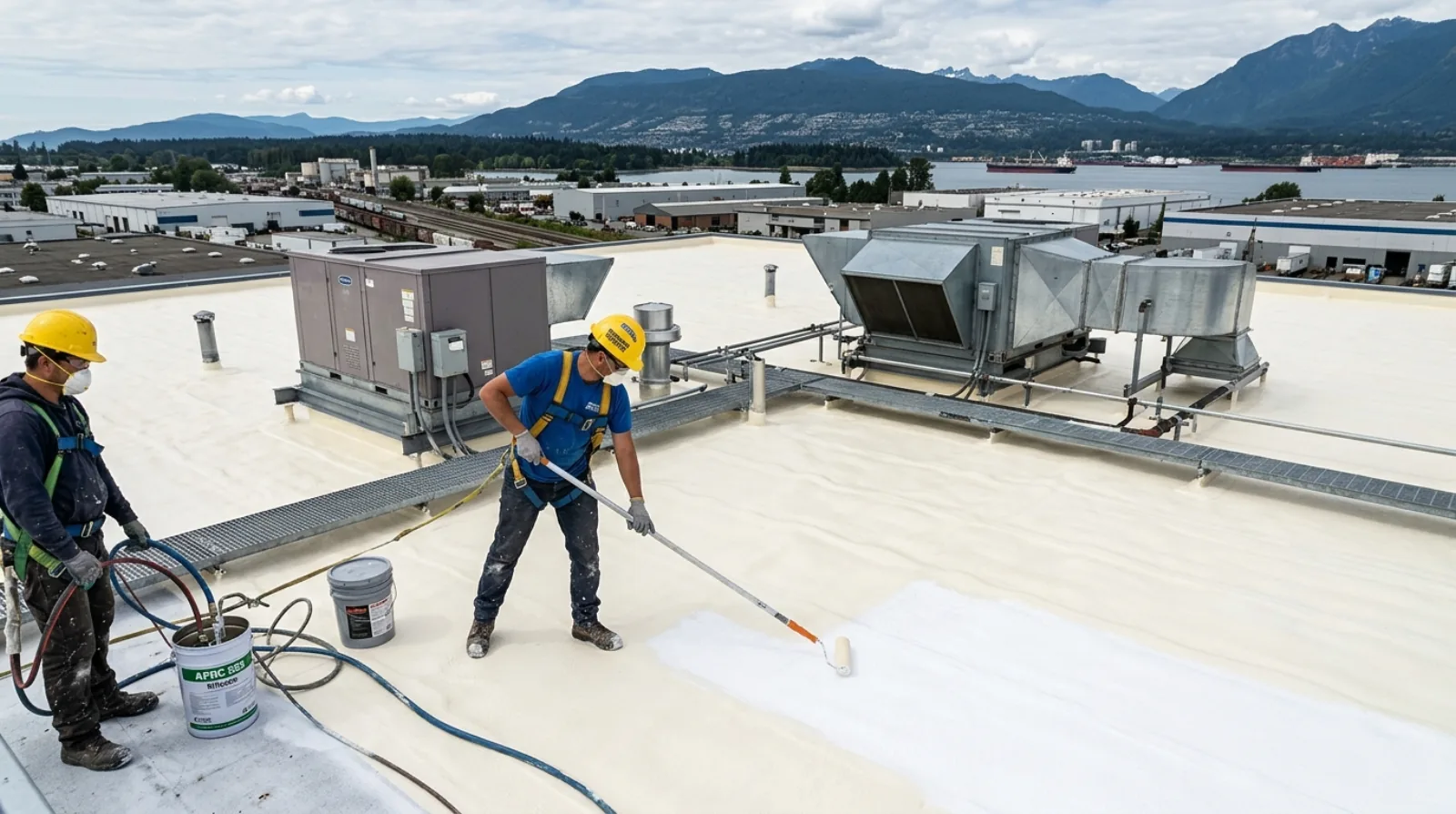 Compare
 Roof recover vs. full tear-off
Overlaying a new membrane over the old one against stripping to the deck. Code limits on layers, hidden moisture risk, cost, and when a recover is false economy.
Read the guide Hub Flat roof systems: the full roofing hub
The two roof guides below sit inside a wider hub covering membrane options, drainage, lifecycle planning, and how to read a roofing bid on a BC strata or commercial building.
Read the guide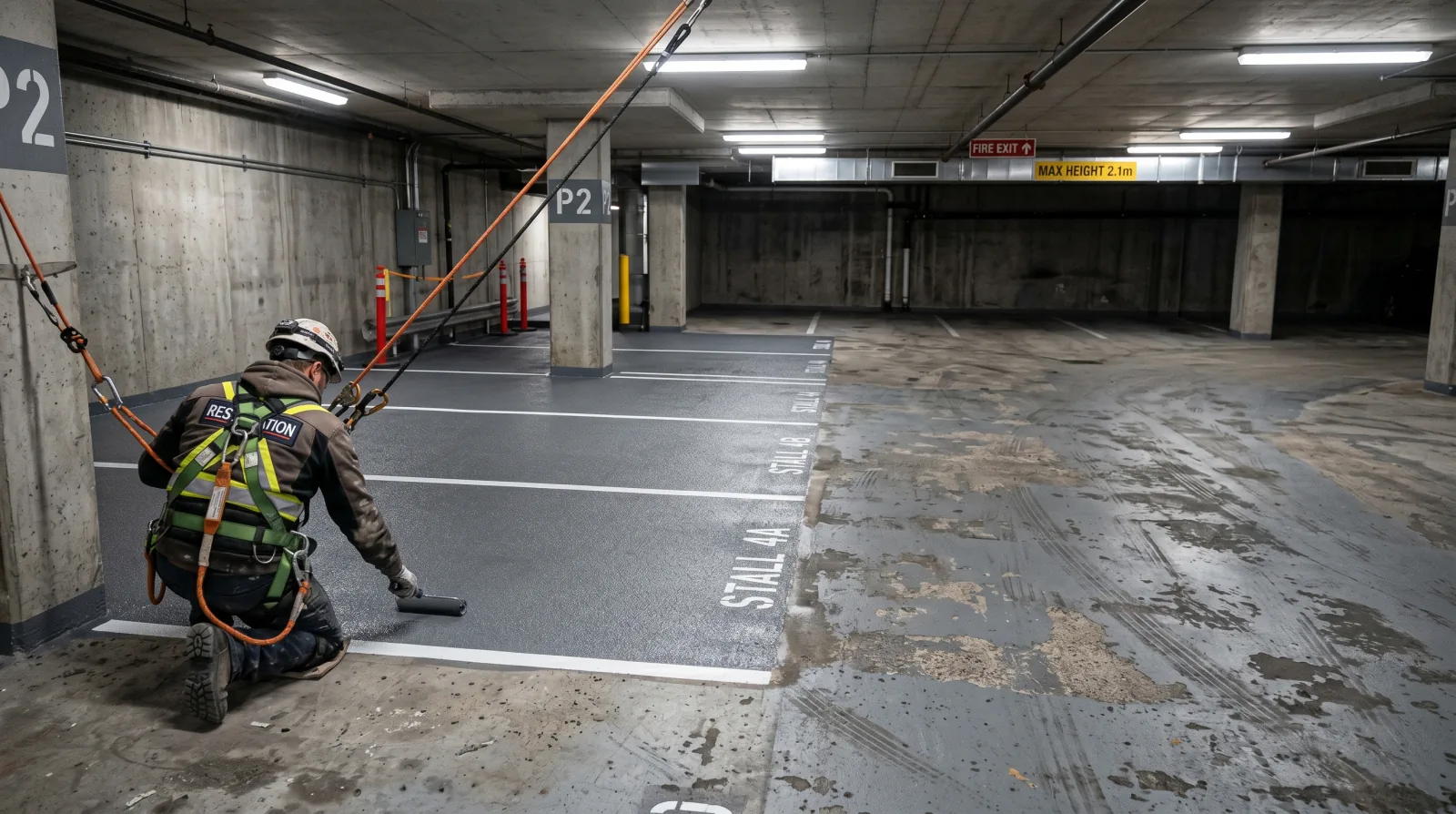 Compare
 Traffic membrane vs. penetrating sealer on a parkade
What actually stops chloride and water from reaching the rebar in a parkade slab, why a penetrating sealer is not waterproofing, and how the recoat cycle differs between the two.
Read the guide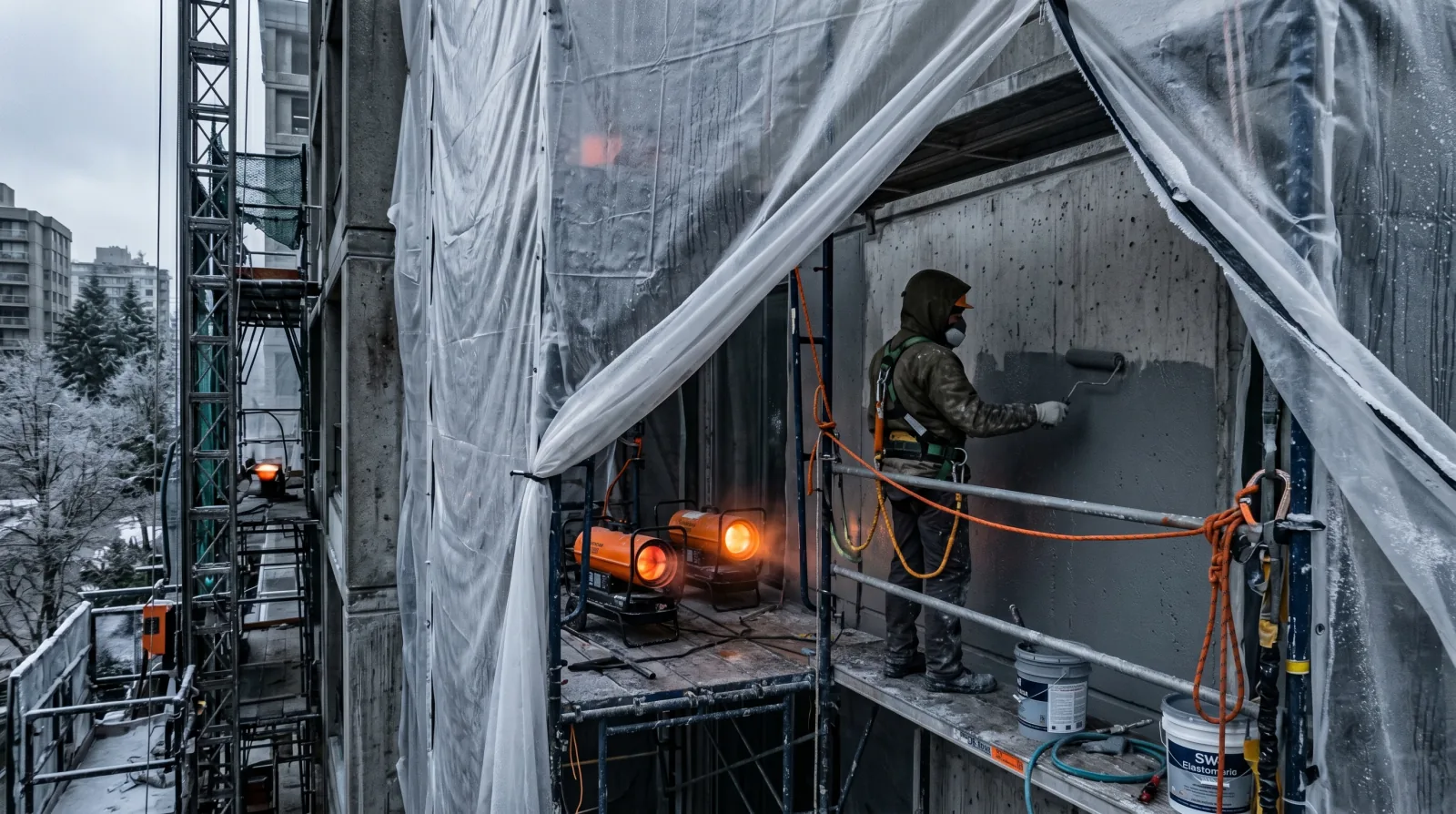 Compare
 Envelope specialist vs. general painter for high-rise coatings
Surface prep rigor, film-build quality control, rope-access certification, and warranty reality when you put a restoration coating on a high-rise. Which type of contractor the work actually needs.
Read the guide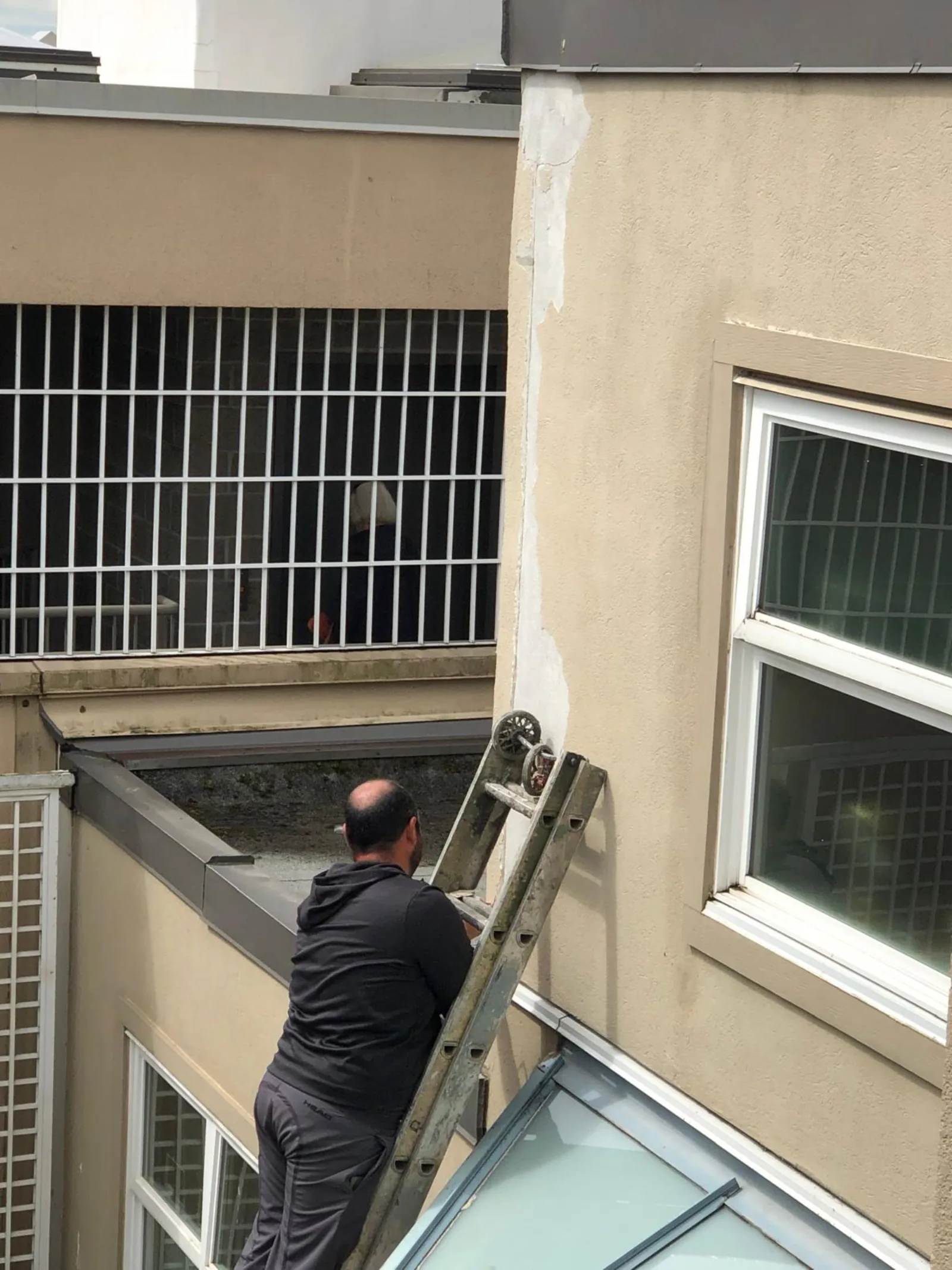 Compare
 Rope-access specialist vs. general contractor for facade work
Using a rope-access envelope crew directly against a general contractor who sublets the access. Coordination layers, cost markup, WorkSafeBC accountability, and single-point responsibility.
Read the guide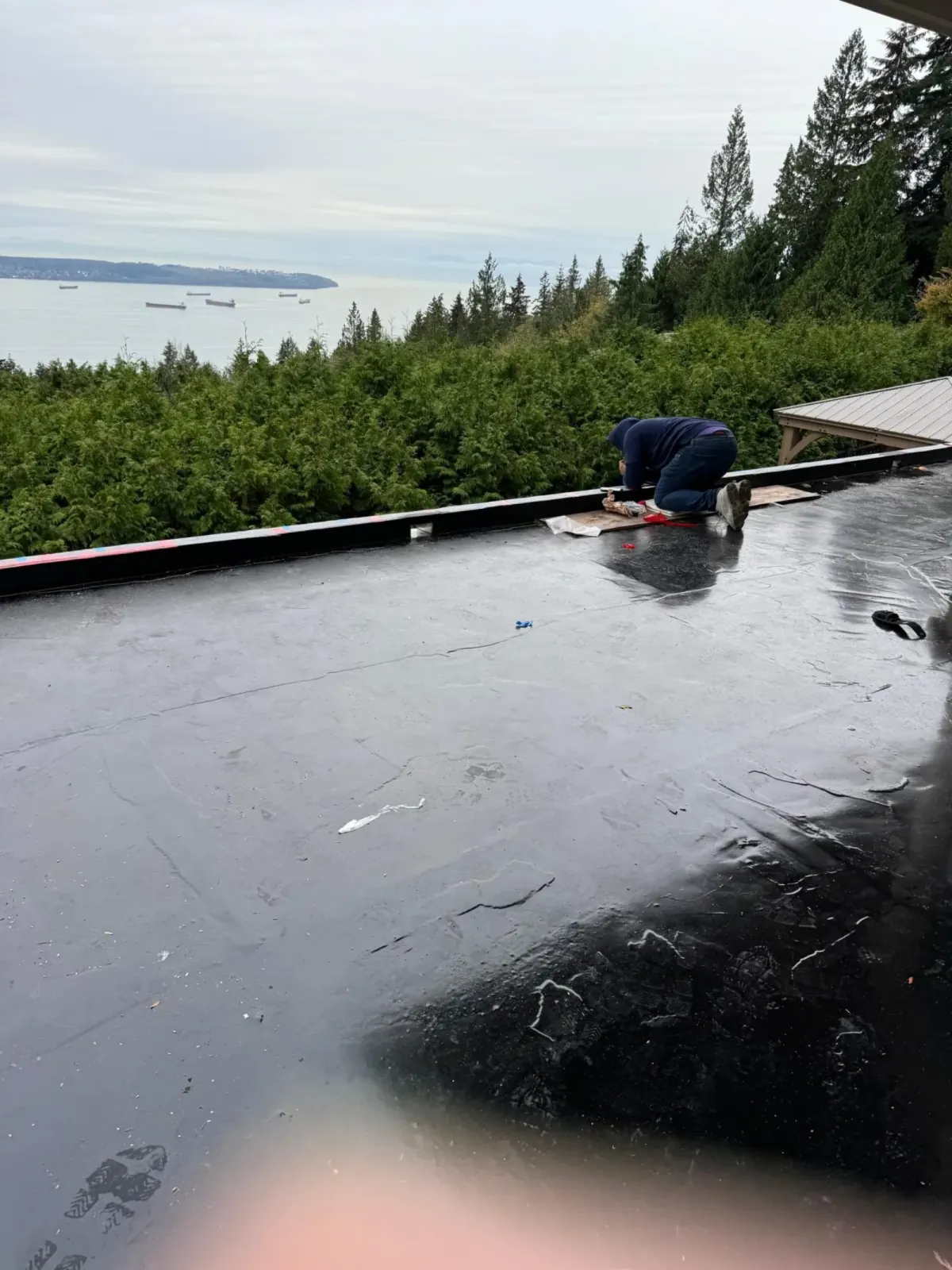 Compare
 In-house strata maintenance vs. specialist contractor
What is safe to keep with in-house or handyman labour and what belongs with a specialist envelope contractor. Liability, warranty, engineering coordination, and where the line sits.
Read the guide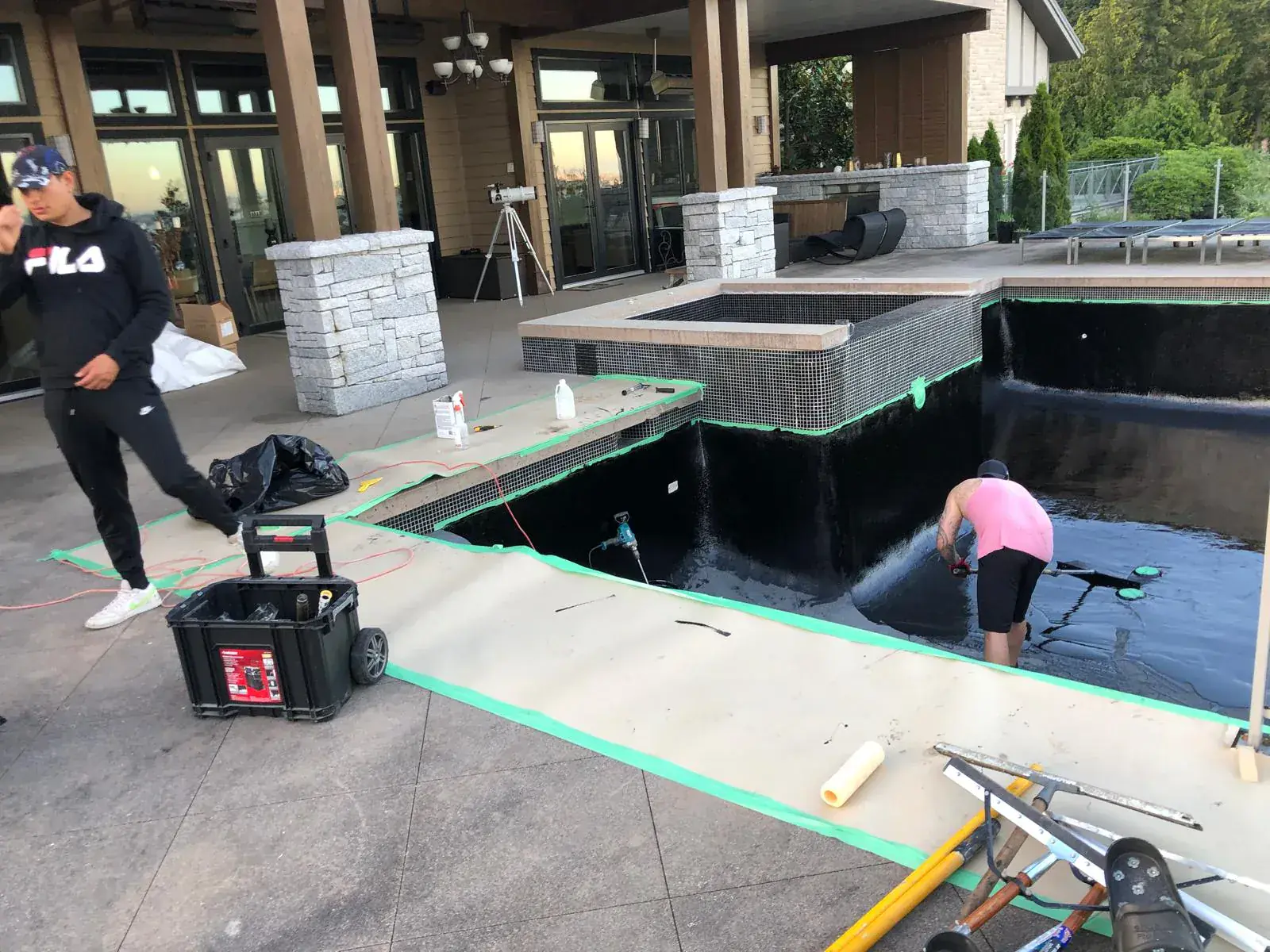 Explainer
 How a building leak investigation actually works
Why the ceiling stain is rarely above the real entry point, and the diagnostic sequence — visual, infrared, calibrated water testing, moisture readings — that traces a leak to its actual source before any repair is scoped.
Read the guideThe envelope is one system, and the BC coast tests every joint in it
A building keeps water out through a chain of details that all have to work together: the roof sheds it, the flashings direct it, the wall drains it, the sealant joints close the gaps, and the balcony and parkade membranes protect the concrete underneath. Break one link and water finds the next weak point. That is why a stain on a third-floor ceiling can trace back to a failed detail at the roof parapet, and why scoping repairs trade by trade, without one set of eyes on the whole assembly, tends to chase symptoms instead of causes.
Metro Vancouver makes this harder than almost anywhere in Canada. The region takes sustained, wind-driven rain against the building face for months, not the odd storm. Any detail that depends on a perfect outer seal will eventually let water in, and the envelope has to be built to drain and dry that incidental water rather than promise to stop every drop. That single idea, manage the water you let in instead of pretending none gets in, is what separates the systems that survive here from the ones that failed in the leaky-condo era.
That history is not academic. From the late 1980s into the mid 1990s, face-sealed walls across the region trapped water they could not drain, and the framing rotted behind cladding that looked fine from the street. The fix was rainscreen construction, a drained and vented cavity behind the cladding, which the City of Vancouver required from 1996 and coastal BC adopted by 2006. Buildings from that first era are now well into their service life, so the repair-or-reclad question and the reserve-fund planning around it are live issues for a lot of strata councils in 2026.
Why these decisions belong to the strata council, not just the trades
In a BC strata the envelope is common property. That means the strata corporation, funded through the contingency reserve fund and special levies under the Strata Property Act, owns the decision and the bill, not the individual owner behind the wall. The depreciation report sets the planning horizon, the engineering firm scopes the condition, and the council has to choose between options that trade upfront cost against remaining service life and resident disruption. These are governance decisions with a building-science core.
The guides in this hub are built to support that decision. They connect to the practical work through our building envelope repair and building restoration services, and cross-reference the exterior coatings hub for the surface side of the same assembly. Read the comparison that matches the decision in front of you, then have a qualified engineer confirm the condition before the council commits the funds.
Quick answers
What is the building envelope on a Metro Vancouver building?
The building envelope is every part of the building that separates the inside from the weather: the exterior walls and cladding, the windows and their perimeter seals, the roof, the balconies and decks, and the parkade slab where it meets soil or open air. On the BC coast the envelope works hard, because Vancouver takes over 1,100 mm of wind-driven rain a year against exposed west and south faces. When one part of the system fails, water gets into the assembly and finds the next weak point, so a leak at a window head can show up as damage three floors down. Treating the envelope as one connected system, not a list of separate trades, is how you keep the repair bill from compounding.
Why does the leaky-condo era still matter for buildings built today?
From the late 1980s through the mid 1990s, thousands of Metro Vancouver condos were built with face-sealed walls that had no way to drain or dry once water got past the outer skin. Trapped water rotted the framing and grew mould, and the repair bills ran into the billions across the region. In response, rainscreen construction (a drained and vented cavity behind the cladding) became a requirement in the City of Vancouver in 1996 and across coastal BC by 2006, per BC Housing guidance. Buildings from that first era are now decades into their service life, and many are only on their first or second envelope renewal. So the legacy still drives a lot of the repair, recladding, and reserve-fund planning that strata councils face in 2026.
How do I know whether my building needs a repair or a full renewal?
The honest answer is that you usually cannot tell from the ground, and neither can a contractor who only looks from the ground. The trigger for real decisions is a building envelope condition assessment (a BECA) by a qualified engineering firm, which opens up sample areas of the wall, checks moisture content, and reports how much service life the cladding and membranes have left. If the damage is local and the rest of the assembly is sound, a targeted repair is the right spend. If the same failures keep appearing across many elevations, or the cladding is at the end of its life, repeated repairs just delay a renewal you will pay for anyway. The comparison guides in this hub walk through the specific decision points for each system.
From the resources library
Services this guide connects to
Building envelope questions
What is the building envelope on a Metro Vancouver building?
The building envelope is every part of the building that separates the inside from the weather: the exterior walls and cladding, the windows and their perimeter seals, the roof, the balconies and decks, and the parkade slab where it meets soil or open air. On the BC coast the envelope works hard, because Vancouver takes over 1,100 mm of wind-driven rain a year against exposed west and south faces. When one part of the system fails, water gets into the assembly and finds the next weak point, so a leak at a window head can show up as damage three floors down. Treating the envelope as one connected system, not a list of separate trades, is how you keep the repair bill from compounding.
Why does the leaky-condo era still matter for buildings built today?
From the late 1980s through the mid 1990s, thousands of Metro Vancouver condos were built with face-sealed walls that had no way to drain or dry once water got past the outer skin. Trapped water rotted the framing and grew mould, and the repair bills ran into the billions across the region. In response, rainscreen construction (a drained and vented cavity behind the cladding) became a requirement in the City of Vancouver in 1996 and across coastal BC by 2006, per BC Housing guidance. Buildings from that first era are now decades into their service life, and many are only on their first or second envelope renewal. So the legacy still drives a lot of the repair, recladding, and reserve-fund planning that strata councils face in 2026.
How do I know whether my building needs a repair or a full renewal?
The honest answer is that you usually cannot tell from the ground, and neither can a contractor who only looks from the ground. The trigger for real decisions is a building envelope condition assessment (a BECA) by a qualified engineering firm, which opens up sample areas of the wall, checks moisture content, and reports how much service life the cladding and membranes have left. If the damage is local and the rest of the assembly is sound, a targeted repair is the right spend. If the same failures keep appearing across many elevations, or the cladding is at the end of its life, repeated repairs just delay a renewal you will pay for anyway. The comparison guides in this hub walk through the specific decision points for each system.
Who is responsible for building envelope work in a BC strata: the owner or the strata?
In almost every BC strata, the building envelope is common property, so the strata corporation is responsible for maintaining and repairing it, not the individual owner whose unit sits behind it. That includes the exterior walls, the roof, the parkade structure, and usually the balcony membranes and the windows, depending on how the strata plan and bylaws are written. Funding comes from the contingency reserve fund and, for larger projects, from special levies approved by the owners. Because the Strata Property Act and the depreciation report drive how these projects get planned and paid for, envelope decisions are as much a governance question for the strata council as a technical one.
What order should envelope repairs happen in?
Water runs downhill and enters at the top, so the general rule is to fix the assembly from the top and the joints first. Roof and flashing details, then window and panel-joint sealants, then wall coatings, then balconies and the parkade below. Coating a wall while the sealant joints around the windows are still open just traps water behind the new coating and wastes the money. On a real project the trades overlap and get sequenced around weather windows and resident access, but the principle holds: stop the water getting in before you make the surface look finished. A specialist who scopes the whole envelope at once will sequence this correctly instead of fixing one symptom at a time.
Does more coastal rain in Vancouver really change what the envelope needs?
Yes, and it is the single biggest reason envelope details that pass in a dry climate fail here. Metro Vancouver gets sustained, wind-driven rain against the building face for months, not the occasional storm, so any detail that relies on a perfect outer seal will eventually let water in. That is exactly why the region moved to rainscreen walls and why membranes, flashings, and drainage paths matter more than the look of the finish. A roof or wall system that manages the water it lets in, rather than promising to keep every drop out, is what survives the BC coast. Every comparison in this hub is judged against that coastal rain load, not a generic climate.
Facing an envelope decision on a strata or commercial building?
We assess walls, roofs, balconies, and parkade slabs across Vancouver, North Vancouver, West Vancouver, and Burnaby, and give you the condition data to choose between repair and renewal, and budget it accurately.